Minimalist Website Examples That Actually Inspire (2026)
 Marcel Cruz
Minimalist websites convert better. Not because they're trendy, but because they remove everything competing with the action you want visitors to take.
Pages with fewer elements have higher conversion rates. Faster load times. Lower bounce rates. When there's nothing to distract from your headline, your product shot, or your CTA button, people actually engage with them.
But "minimalist" doesn't mean "empty." The best minimalist sites are ruthlessly intentional: every pixel earns its place.
Here are 12 real websites that nail it, broken down by exactly what makes each one work and what you can steal for your own site.
1. Apple
What they do: Consumer electronics and software. URL: apple.com
Apple's site is the textbook example for a reason. Massive product photography on dark or white backgrounds, one product per viewport, zero clutter. The navigation collapses to a thin bar with just seven items. Every page is a single scroll through hero images with short, punchy copy.
Why it works: Apple uses scale as a design tool. When a MacBook fills 80% of the viewport and the only text is "Supercharged by M4," your eye has nowhere else to go. The lack of sidebars, banners, and competing CTAs forces a linear reading experience.
Steal this: One message per screen section. If you're scrolling through a page and each viewport delivers exactly one idea, you've got Apple-level clarity.
2. Aesop
What they do: Premium skincare and personal care products. URL: aesop.com
Aesop's entire site lives in a palette of cream, olive, and brown, the same tones as their product packaging. Instead of traditional product grids, the homepage uses collage-style layouts that feel more like an editorial spread than an online store. White space does the heavy lifting: products float in generous padding that makes each one feel premium.
Why it works: Color restraint. The entire site uses maybe five colors total, all pulled from the product line itself. This creates a seamless brand experience where the website feels like the product. Nothing competes for attention because everything belongs to the same visual family.
Steal this: Pull your website's color palette directly from your product or brand materials. Two to three colors max. When everything is tonally consistent, minimalism happens naturally.
3. Kinfolk
What they do: Lifestyle and culture magazine. URL: kinfolk.com
Kinfolk might be the most extreme example of "let the content breathe." The homepage is essentially a gallery: large editorial images with minimal text overlays, separated by aggressive amounts of white space. The typography is a single serif typeface used at different sizes. No color accents. No sidebar. No newsletter popup.
Why it works: Kinfolk treats whitespace as a design element, not wasted space. The gaps between content blocks are often as tall as the content itself. This creates a reading rhythm that feels calm and intentional, which is exactly what a lifestyle brand should convey.
Steal this: Double the padding you think you need between sections. Seriously. Most websites cram elements too close together. The breathing room is what makes minimalism feel luxurious rather than sparse.
4. Toteme
What they do: Scandinavian fashion brand. URL: toteme.com
Toteme's e-commerce site uses a strict grid system that makes browsing feel architectural. Product images are large and uniform, shot on plain backgrounds with consistent lighting. The navigation is a single horizontal line of text. No hover effects, no animation, no promotional banners.
Why it works: Consistency. Every product image follows the same template: same crop, same lighting, same background. This rigid grid system means the products themselves become the only variable, making comparison effortless and browsing almost meditative.
Steal this: If you're showing multiple items (products, projects, testimonials), standardize the format ruthlessly. Same image dimensions, same text structure, same spacing. The grid does the design work for you.
5. Cowboy
What they do: Electric bikes. URL: cowboy.com
Cowboy proves minimalism doesn't require a white background. Their site is predominantly dark: charcoal and black backgrounds with the bike rendered in dramatic lighting. The text is spare: short headlines, no paragraphs longer than two sentences. Product specs are delivered through simple icons rather than dense tables.
Why it works: Dark minimalism creates a premium, almost cinematic feeling. By restricting the palette to dark tones with occasional white text, the bike's silhouette becomes the focal point. The limited copy forces the product to sell itself visually.
Steal this: Don't default to white backgrounds. Dark backgrounds with limited, high-contrast text can feel even more minimal, and more premium, than the standard white-and-gray approach.
6. Studio Nido
What they do: Architecture firm in San Francisco. URL: studionido.archi
Studio Nido opens with a full-bleed photograph of their work. No headline. No tagline. No CTA. Just a stunning interior shot that immediately communicates what they do and how well they do it. The navigation is a discrete hamburger menu. As you scroll, project images alternate with generous white space.
Why it works: For visual industries (architecture, photography, design), the work is the pitch. Studio Nido trusts their portfolio enough to let it speak without any supporting text on the homepage. This confidence is its own form of minimalism.
Steal this: If your work is visual, lead with it. A strong image above the fold with zero text overlay is braver and more effective than any headline you could write.
7. Leen Heyne
What they do: Contemporary jewelry. URL: leenheyne.nl
Leen Heyne uses a centered single-column layout with enormous margins on both sides. The homepage alternates between close-up product shots and short text blocks set in a delicate serif typeface. The entire site feels like a gallery: each piece is presented one at a time with nothing else on screen.
Why it works: The single-column layout eliminates any navigation within the page. Your only option is to scroll down. This creates a deliberate, sequential experience where each jewelry piece gets your full attention. The wide margins frame each element like a physical display case.
Steal this: Single-column layouts are underrated. By constraining content to a narrow center column (40-60% of viewport width), you automatically create minimalism through generous side margins.
8. Dropbox
What they do: Cloud storage and collaboration platform. URL: dropbox.com
Dropbox rebuilt their marketing site around large illustrations and short copy blocks. Each section delivers one feature with one visual and one sentence. The color palette rotates between pastel sections but never uses more than two colors per block. Navigation is five items. The pricing page is a simple three-column table.
Why it works: Dropbox treats each scroll section as its own slide in a presentation. One idea, one illustration, one sentence. This chunked approach means visitors can absorb the product's value without reading paragraphs of copy.
Steal this: Write your page content as a presentation deck first. If each section can't be reduced to a single slide (one headline, one supporting visual), it's too complex for a minimalist layout.
9. Mogutable
What they do: Home goods and furniture e-commerce. URL: mogutable.com
Mogutable sells a lot of products but never feels cluttered. The trick: neutral backgrounds, small typography, and massive product images that change on hover. No product descriptions on the listing pages. Just the image, a name, and a price. The color palette is almost entirely beige, white, and gray, letting the products' natural colors pop.
Why it works: Mogutable removes every element that doesn't directly help you shop. No ratings, no badges, no "bestseller" tags. The hover-to-reveal interaction means the static page stays ultra-clean while still providing the product variety you'd expect from an e-commerce store.
Steal this: On listing or gallery pages, show only the absolute essentials. Hide secondary information behind hover states or click-throughs. The less you show by default, the calmer the page feels.
10. Salt & Stone
What they do: Natural skincare and sun care. URL: saltandstone.com
Salt & Stone's homepage is a masterclass in functional minimalism. A scrolling ticker at top for promotions, one hero image of their flagship product, and a simple nav bar with four items. Below the fold, products are arranged in a clean grid with consistent photography. The entire site uses maybe 200 words of copy on the homepage.
Why it works: Everything above the fold serves a direct commercial purpose: the ticker drives urgency, the hero image showcases the product, the nav gets you shopping. There's no "about us" preamble, no brand story intro. It respects your time by getting straight to what you came for.
Steal this: Audit your homepage for any element that doesn't directly serve the visitor's goal. Brand story? Move it to the about page. Mission statement? Kill it. Keep only what helps someone take the next step.
11. Nécessaire
What they do: Body care essentials. URL: necessaire.com
Nécessaire's product pages use thin lines, negative space within the images themselves, and a monochromatic palette to achieve a clinical, spa-like minimalism. The layout splits into a rigid two-column grid: product on the left, details on the right. Typography is thin and lowercase throughout.
Why it works: The monochromatic approach extends into the product photography, with even the products themselves designed in neutral tones. When your product design and your web design share the same visual language, the minimalism feels authentic rather than imposed.
Steal this: Align your product design with your web design. If your physical product is colorful and loud, forcing it into a minimalist website creates visual tension. Minimalism works best when it's consistent across every touchpoint.
12. Matt D'Avella
What they do: Filmmaker and minimalism content creator. URL: mattdavella.com
Matt D'Avella practices what he preaches. His personal website is a single page with a photo, a short bio, links to his work, and a newsletter signup. No blog. No lengthy portfolio. No social proof section. Just the essentials for someone who already knows his name and wants to go deeper.
Why it works: For personal brands, the person is the product. Matt's site works because it's just a routing page: it sends you to YouTube, his podcast, or his courses. It doesn't try to replicate content that lives better on other platforms.
Steal this: If you're a creator, your website doesn't need to duplicate your content. Use it as a clean hub that routes people to where your content actually lives.
Design Principles From These Examples
After looking at 12 minimalist sites, clear patterns emerge:
Whitespace is the design. Not decoration, not leftover space. The gaps between elements are as intentional as the elements themselves. Kinfolk and Leen Heyne both use margins that most designers would consider excessive. That excess is the design.
Fewer navigation items, always. Apple uses seven. Toteme uses five. Salt & Stone uses four. None of these sites have mega-menus or dropdown navigation. If your nav has more than seven items, you're not minimalist. You're just organized clutter.
One typeface is enough. Most of these sites use a single font family at different weights and sizes. Two typefaces maximum. The typography variety comes from size hierarchy, not font variety.
Color restraint beats color theory. Aesop uses five colors pulled from their products. Cowboy uses two (black and white). The sites that feel most cohesive are the ones that resist the urge to add accent colors.
Photography does the heavy lifting. In every example, the images are the main content, not supporting content. When your photos are good enough, you need less of everything else.
How to Apply Minimalist Design to Your Bio Link Page
Your bio link page is already one of the smallest web pages you'll ever build. That makes it the perfect canvas for minimalist design.
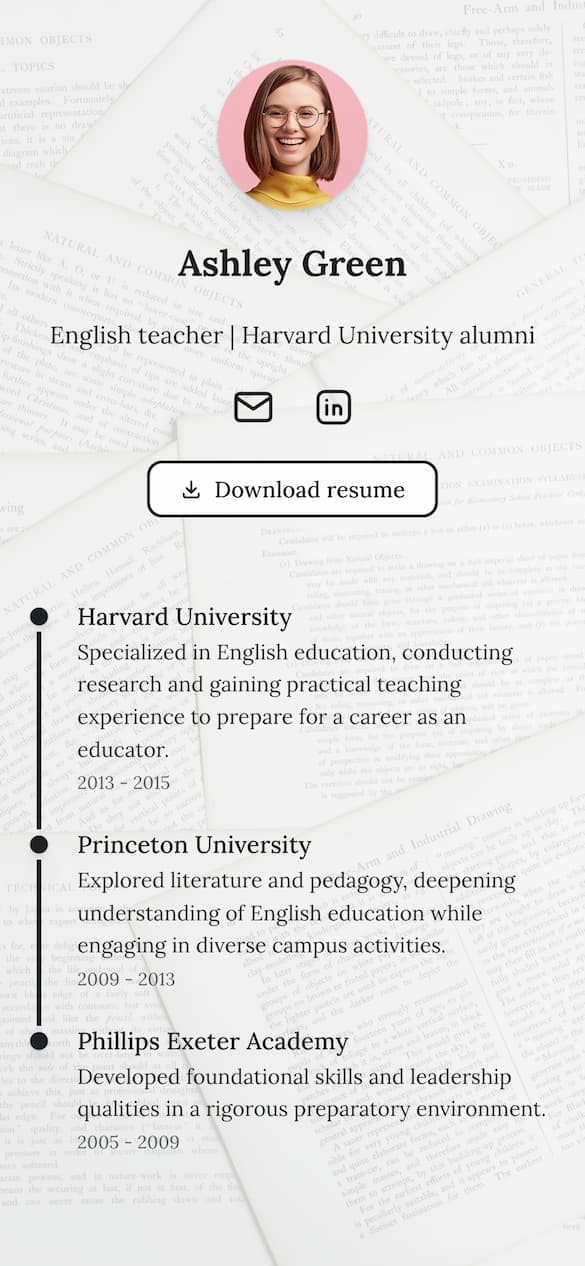
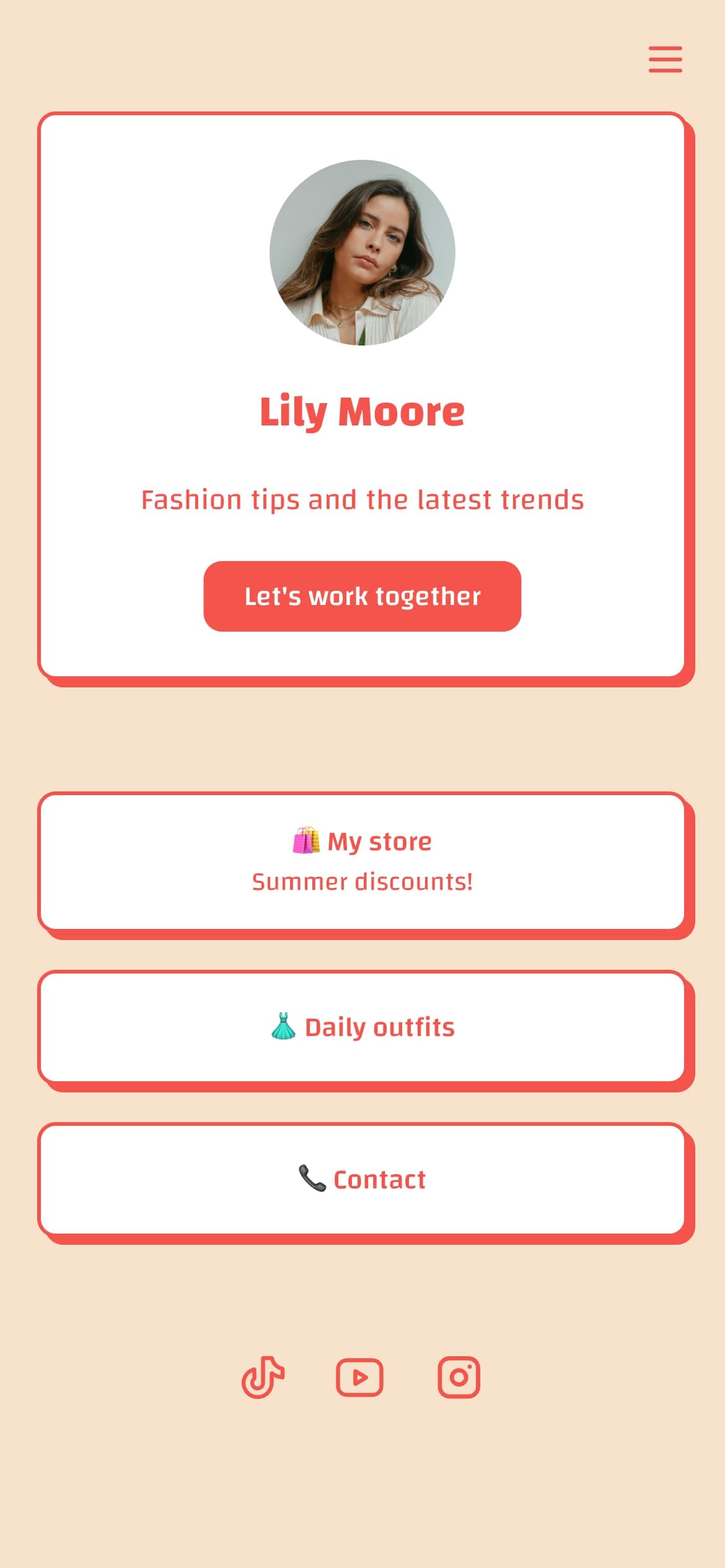
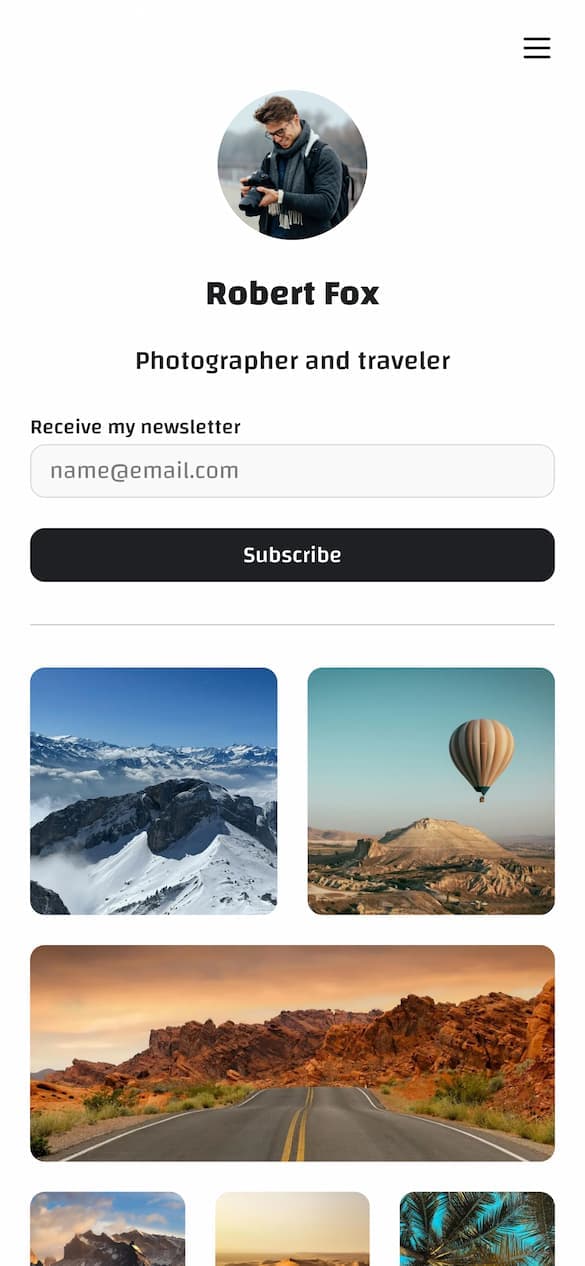
The problem is most bio link pages look the opposite of minimalist: stacked buttons in clashing colors, busy backgrounds, too many links fighting for attention. Applying even two or three principles from the examples above transforms a cluttered link page into something that actually looks designed:
- Limit your links to 5-7. If Apple can navigate a trillion-dollar company with seven nav items, you can route your audience with fewer links.
- Pick one accent color. Not a gradient, not a rainbow. One color for your buttons, everything else neutral.
- Use whitespace between link blocks. Let each link breathe like a Kinfolk editorial spread.
- Lead with your strongest content. Like Studio Nido, put your best work first and let it sell without explanation.
Linkero's clean themes are built for exactly this approach. The default layouts already use generous spacing, simple typography, and restrained color palettes. Start with a minimal theme, add your links, and resist the urge to customize everything.
Build Your Page in Minutes
Drag-and-drop editor with 18 content blocks, per-block styling, and custom themes.
Create your pageFAQ
What makes a website minimalist?
A minimalist website uses whitespace, limited color palettes (2-3 colors), simple typography (1-2 typefaces), and only the elements necessary for the user's goal. It's not about being empty. It's about being intentional. Every element earns its place by serving a clear purpose.
Why do minimalist websites convert better?
Fewer distractions mean more focus on your call to action. When there's only one button on screen instead of six, click-through rates go up. Minimalist sites also load faster (fewer elements, smaller files) which directly reduces bounce rates. Google found that 53% of mobile visitors leave a page that takes longer than 3 seconds to load.
Is minimalist web design good for SEO?
Yes. Minimalist sites tend to load faster, have cleaner code, and focus content around specific topics, all things Google rewards. The key is making sure "minimal" doesn't mean "thin." You still need enough quality content to satisfy search intent.
How many colors should a minimalist website use?
Two to three, maximum. Most examples in this list use a neutral base (white, black, or gray) with one accent color. Aesop uses earth tones from their products. Cowboy uses black and white only. The constraint forces you to make every color choice count.
Can an e-commerce site be minimalist?
Absolutely. Toteme, Aesop, Mogutable, and Salt & Stone are all online stores. The key is using consistent product photography, clean grids, and hiding secondary information (reviews, specs, badges) behind interactions rather than showing everything at once.
What's the difference between minimalist and boring?
Intention. A boring website has no visual hierarchy: everything looks the same. A minimalist website has strong hierarchy, where the few elements it shows are sized, spaced, and colored to guide your eye exactly where it needs to go. The examples above are proof: minimalism done right feels premium, not empty.