Personal Branding Guide: 7-Step Framework (2026)
 Marcel Cruz
A personal branding guide should give you a clear system, not vague advice like "be authentic." Here's the reality: 70% of employers now say a personal brand matters more than a resume, and 98% of them research you online before making contact. Whether you're a freelancer pitching clients, a creator building an audience, or a professional angling for your next role, your personal brand is the first thing people evaluate. This guide gives you a concrete 7-step framework to build one that actually works, with real examples, platform-specific tactics, and the specific moves that separate memorable brands from forgettable ones.
What Personal Branding Actually Is (And Isn't)
Personal branding isn't posting motivational quotes on LinkedIn. It's not a logo, a color palette, or a catchy tagline.
Your personal brand is the reputation that precedes you. It's what people say about you when you're not in the room, and what they find when they Google your name.
More specifically, it's the intersection of three things:
- What you're known for (your expertise and point of view)
- How you show up (your voice, visuals, and consistency)
- Where people find you (your platforms, content, and central hub)
A strong personal brand means someone can describe what you do and why you're different in one sentence. If people who follow you can't do that, your brand isn't clear enough yet.
Why It Matters More in 2026
This isn't motivational fluff. The data is stark:
- 44% of employers have hired someone specifically because of their personal brand
- 54% have rejected candidates because of a weak or problematic online presence
- Professionals with recognized personal brands command up to 13.5x higher fees than peers without one
- 82% of consumers trust companies more when executives are active on social media
- Creators with strong niche authority see 3–7x higher conversion rates compared to traditional corporate marketing
The shift is structural. Traditional media trust is at record lows: only 31% of Americans have confidence in mass media. People trust individual voices over institutions now. That's why personal brands are becoming the new media companies.
Forbes reported that professionals now consider personal branding more important than their resume. That's not a trend. It's the new baseline.
The 7-Step Personal Branding Framework
Step 1: Pick Your One Thing
Most branding advice tells you to "find your niche." That's too vague. Instead, complete this sentence:
"I help [specific audience] achieve [specific outcome] through [your specific approach]."
Real examples:
- Ali Abdaal: "I help knowledge workers become more productive through evidence-based techniques" (not just "productivity tips")
- Aleyda Solis: "I help companies grow organic traffic through technical SEO" (not just "SEO consultant")
- Lauren Hom: "I create playful lettering that makes brands feel approachable" (not just "designer")
Notice the pattern. Each one names a specific audience, a specific result, and a specific method. "Freelance designer" is a job title. "UX designer helping SaaS startups simplify onboarding" is a personal brand.
If you can't fill in that sentence clearly, you're not ready for step 2.
Step 2: Audit Your Current Presence
Before building anything new, see what already exists. Google yourself. Check:
- What comes up on page 1? Old LinkedIn profile? Random forum post? Nothing at all?
- Is your messaging consistent across platforms, or does your LinkedIn say one thing and your Instagram bio say another?
- Can someone figure out what you do within 5 seconds of landing on any of your profiles?
47% of employers won't interview someone they can't find online. If your Google results are empty or messy, that's your starting point.
Quick audit checklist:
- Same professional photo across all platforms
- Same core description/bio everywhere
- Links that work and point somewhere useful
- No cringe content from 2014 that contradicts your current brand
Step 3: Build Your Content Pillars
Content pillars are the 3–5 topics you consistently create around. They're the backbone of your brand's voice.
Pick them using this filter:
- You have genuine expertise (not surface-level knowledge)
- Your audience cares about it (it solves a real problem for them)
- You can create around it for years without burning out
For a freelance copywriter, your pillars might be:
- Conversion copywriting tactics (your craft)
- Freelance business lessons (your journey)
- Client communication tips (your experience)
- Behind-the-scenes of real projects (your proof)
For a fitness creator:
- Workout programming (expertise)
- Nutrition science simplified (education)
- Client transformations (social proof)
- Day-in-the-life content (relatability)
The mix matters. Pure expertise content builds authority. Personal content builds connection. Social proof builds trust. You need all three.
Step 4: Choose Your Primary Platform
The biggest mistake people make is trying to be everywhere at once. Pick one platform to dominate first. Expand later.
Here's how to choose:
LinkedIn: Best for B2B professionals, consultants, coaches, and anyone whose clients make decisions at work. 89% of B2B professionals use LinkedIn for professional purposes. If your ideal client has a job title, start here.
- Post at least every 3 days (91% of successful LinkedIn creators maintain this cadence)
- Image posts outperform everything: 67% of top-performing posts are image-based
- Skip the hashtags. 88% of viral LinkedIn posts use zero hashtags
- Engagement drops as follower count grows, so focus on conversations in comments over vanity metrics
Instagram: Best for visual creators, lifestyle brands, local businesses, and anyone whose work is visual. 76% of 18–29 year olds use it.
- Reels get 2x the reach of static posts in 2026
- Carousel posts drive the highest saves (and saves signal value to the algorithm)
- Your bio + link-in-bio is your conversion funnel, so treat it like a landing page, not an afterthought
TikTok: Best for reaching younger audiences, building awareness fast, and testing content ideas. 55% of 18–29 year olds are here.
- Hook in the first 1–2 seconds or lose them
- Educational content ("Here's how I...") outperforms polished content
- Consistency beats production quality every time
X (Twitter): Best for thought leadership, tech, media, and real-time industry conversations.
- Threads build authority faster than single tweets
- Engage with bigger accounts in your niche daily (replies are the growth hack)
- Hot takes get attention; thoughtful takes build a following
The rule: Go deep on one platform for 90 days before adding another. Every platform you add dilutes your energy.
Step 5: Create a Central Hub
Here's where most personal branding advice falls short. You're told to build on social media, but you don't own social media. Algorithms change. Platforms die. Accounts get suspended.
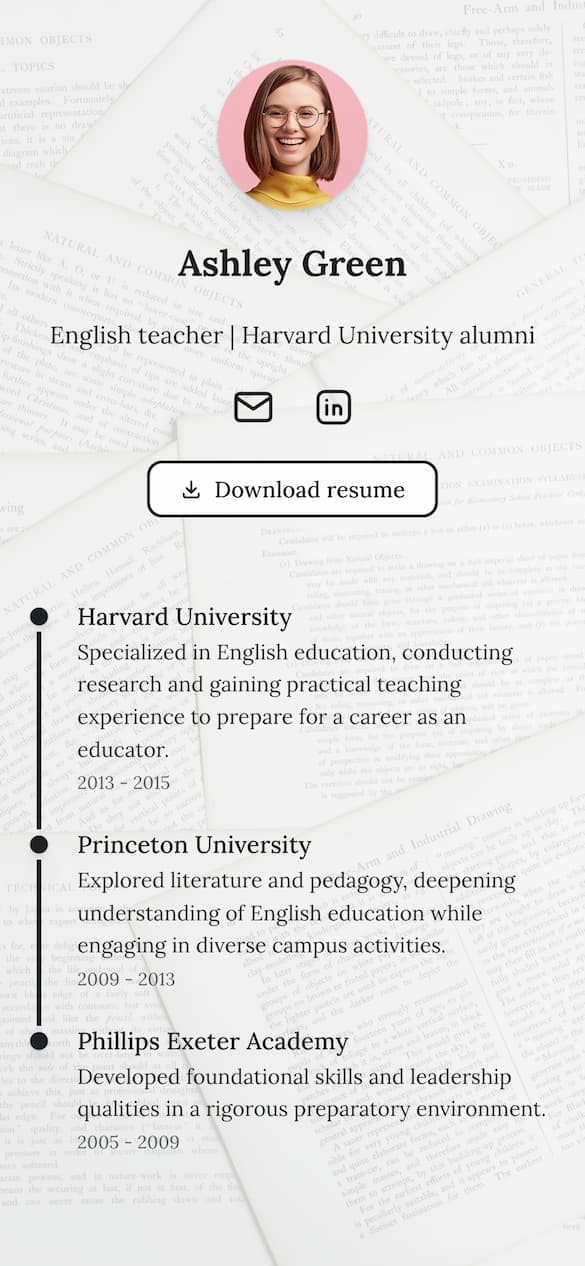
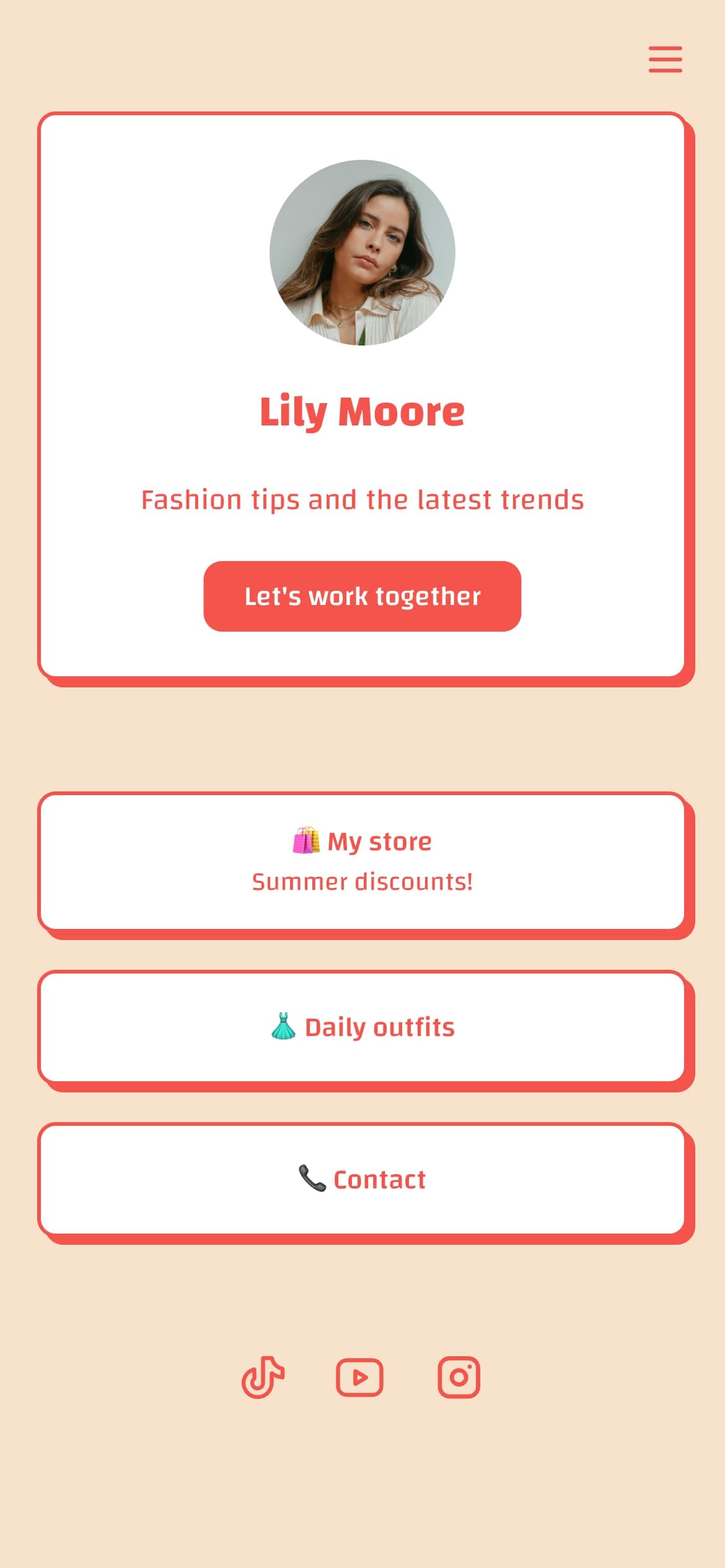
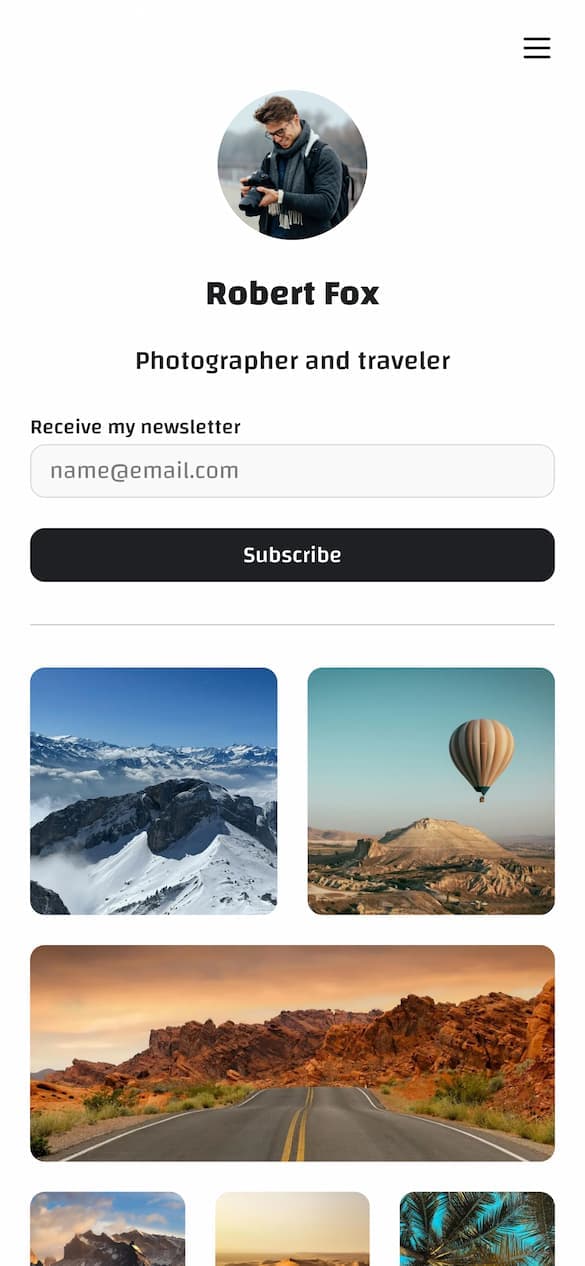
Your bio link is the one thing you control. It's the bridge between every platform and the actions you want people to take: booking a call, joining your newsletter, buying your product, or just learning more about you.
A strong personal brand hub includes:
- Your one-line positioning (from Step 1)
- Links to your best content (not just "my latest post")
- A clear call-to-action (what should someone do next?)
- Social proof (testimonials, logos, numbers)
- Your key platforms (but curated, not a dump of every account)
Think of it as your personal brand's homepage. When someone asks "where can I learn more about you?" this is the answer.
Build Your Page in Minutes
Drag-and-drop editor with 18 content blocks, per-block styling, and custom themes.
Create your pageStep 6: Ship Content Consistently
Here's the uncomfortable truth: the quality of your first 50 posts doesn't matter nearly as much as actually publishing 50 posts.
The 3-2-1 weekly system:
- 3 posts on your primary platform (expertise content)
- 2 interactions with bigger accounts in your niche (comments, replies, shares)
- 1 piece of personal/behind-the-scenes content (builds connection)
Content repurposing makes this sustainable. One long-form piece (a blog post, video, or podcast episode) becomes:
- 3–5 social posts pulling out key insights
- A carousel breaking down the main framework
- A thread expanding on one specific point
- Stories/reels showing the behind-the-scenes
84% of professionals say video will be core to their personal branding in 2026. You don't need a studio. Your phone and natural lighting work fine. What matters is showing up regularly with a clear point of view.
Step 7: Track What Matters (Ignore Vanity Metrics)
Follower count is not a KPI. Here's what actually signals a working personal brand:
- Inbound opportunities: are people reaching out to you? 80% of professionals who focus on authentic personal branding report receiving inbound leads
- Engagement rate: are people responding, saving, sharing? (Not just liking)
- Profile visits → link clicks: are curious people taking the next step?
- Direct messages: people DMing you about your content is the strongest signal
- Revenue: consulting calls, course sales, job offers, partnership inquiries
Review monthly. If inbound opportunities aren't growing after 90 days of consistent effort, revisit Steps 1–3. The problem is almost always positioning clarity, not content volume.
3 Personal Brands That Work (And Why)
Ali Abdaal: The Productivity Polymath
Ali went from junior doctor to the world's most-followed productivity YouTuber. His brand works because of specificity + proof. He doesn't just talk about productivity. He shows his actual systems, shares his income reports, and backs claims with research. His content pillars are clear: productivity, entrepreneurship, and creative lifestyle. Every piece of content reinforces the same positioning.
What to steal: Show your work. Share real numbers, real processes, real results. Transparency builds trust faster than expertise alone.
Aleyda Solis: The Technical SEO Authority
Aleyda built a personal brand in a highly technical niche by being everywhere her audience already was: conference stages, Twitter threads, newsletters, and free tools. She doesn't just share tips; she builds resources (crawl budget calculators, SEO learning roadmaps) that her audience uses daily.
What to steal: Create assets, not just content. A template, tool, or framework that people bookmark and share has more brand-building power than 100 social posts.
Lauren Hom: The Playful Lettering Artist
Lauren's brand is instantly recognizable because of relentless visual consistency and a clear personality. Her "Daily Dishonesty" project (hand-lettered phrases about everyday lies we tell ourselves) went viral because it combined her skill with relatable humor. She turned a personal project into courses, brand work, and a career.
What to steal: Personality isn't optional. The most memorable personal brands have a distinct voice and point of view, not just competence.
5 Personal Branding Mistakes That Actually Kill Your Growth
1. Trying to appeal to everyone. "I'm a creative professional who helps people and brands succeed" describes no one. The narrower your positioning, the faster you grow. You can always expand later.
2. Ignoring your bio link. You spend hours on content but your Instagram bio still says "✨ Living my best life" with a broken link. Your bio link is the highest-intent real estate you have. Treat it accordingly.
3. Copying someone else's voice. You watched Gary Vee and now you're doing aggressive motivational content even though that's not who you are. People sense inauthenticity instantly. 62% of consumers prefer authentic content over polished productions.
4. Treating personal branding as a one-time project. Setting up profiles once and ghosting for 3 months isn't branding. It's a digital business card from 2012. Brands are built through consistent presence over months and years.
5. Never asking for anything. You post great content but never direct people anywhere. No newsletter signup. No consultation link. No product mention. You're building an audience with no way to convert them. Every piece of content should have a clear next step, even if it's subtle.
FAQ
What is personal branding?
Personal branding is the deliberate process of shaping how others perceive your professional identity. It combines your expertise, voice, visual presence, and online activity into a consistent reputation that attracts opportunities, whether that's clients, jobs, speaking gigs, or partnerships.
How long does it take to build a personal brand?
Expect 3–6 months of consistent effort before seeing meaningful results like inbound leads or opportunities. The first 90 days are about establishing your presence and refining your positioning. After 6 months of consistent content and engagement, most people report a noticeable increase in professional opportunities.
Do I need a personal website for personal branding?
A full website isn't required, especially when starting out. What you do need is a central hub — a single link that houses your key information, best content, and calls-to-action. A link-in-bio page serves this purpose perfectly and takes minutes to set up versus weeks for a custom website.
What's the best platform for personal branding?
It depends on your audience. LinkedIn is best for B2B and professional services. Instagram works for visual and lifestyle brands. TikTok is ideal for reaching younger audiences quickly. X is strong for tech, media, and thought leadership. Pick the one where your target audience already spends time and go deep there first.
How is personal branding different from self-promotion?
Self-promotion says "look at me." Personal branding says "here's something useful." The difference is value orientation. Strong personal brands consistently help their audience solve problems, learn something new, or see things differently. The brand-building happens as a byproduct of consistently providing value, not by talking about yourself.
Can introverts build a personal brand?
Absolutely. Some of the strongest personal brands are built through writing, not speaking. Long-form blog posts, thoughtful LinkedIn articles, detailed newsletter editions, and well-crafted carousels don't require being loud or extroverted. Focus on depth over volume. One insightful post per week beats daily surface-level content.
Your Personal Brand Starts With One Step
You don't need to overhaul everything overnight. Start with Step 1: nail your one-sentence positioning. Then build from there.
The professionals winning in 2026 aren't the loudest or most polished. They're the ones who show up consistently with a clear point of view and make it easy for people to learn more about them.
Your bio link is the simplest place to start. One page. Your positioning, your best content, your next step. Done in 10 minutes.
Build Your Page in Minutes
Drag-and-drop editor with 18 content blocks, per-block styling, and custom themes.
Create your page