Link in Bio Design: Does Layout Actually Affect Conversions?
 Marcel Cruz
There's a debate happening right now on Reddit about whether stacked buttons or grid layouts convert better on link-in-bio pages. The short answer: yes, link in bio design affects conversions. But not always in the way you'd expect.
Optimized bio pages see 25-40% higher conversion rates compared to unoptimized ones, according to JPK Design Co's analysis of high-performing creator pages. That gap comes down to three things: layout choice, visual hierarchy, and mobile optimization.
This guide breaks down every major layout type, the design principles that actually move the needle, and how to pick the right approach for your specific situation.
The Five Layout Types (and What They're For)
Not every layout works for every creator. Each one comes with trade-offs between flexibility, visual impact, and conversion clarity.
Stacked Buttons
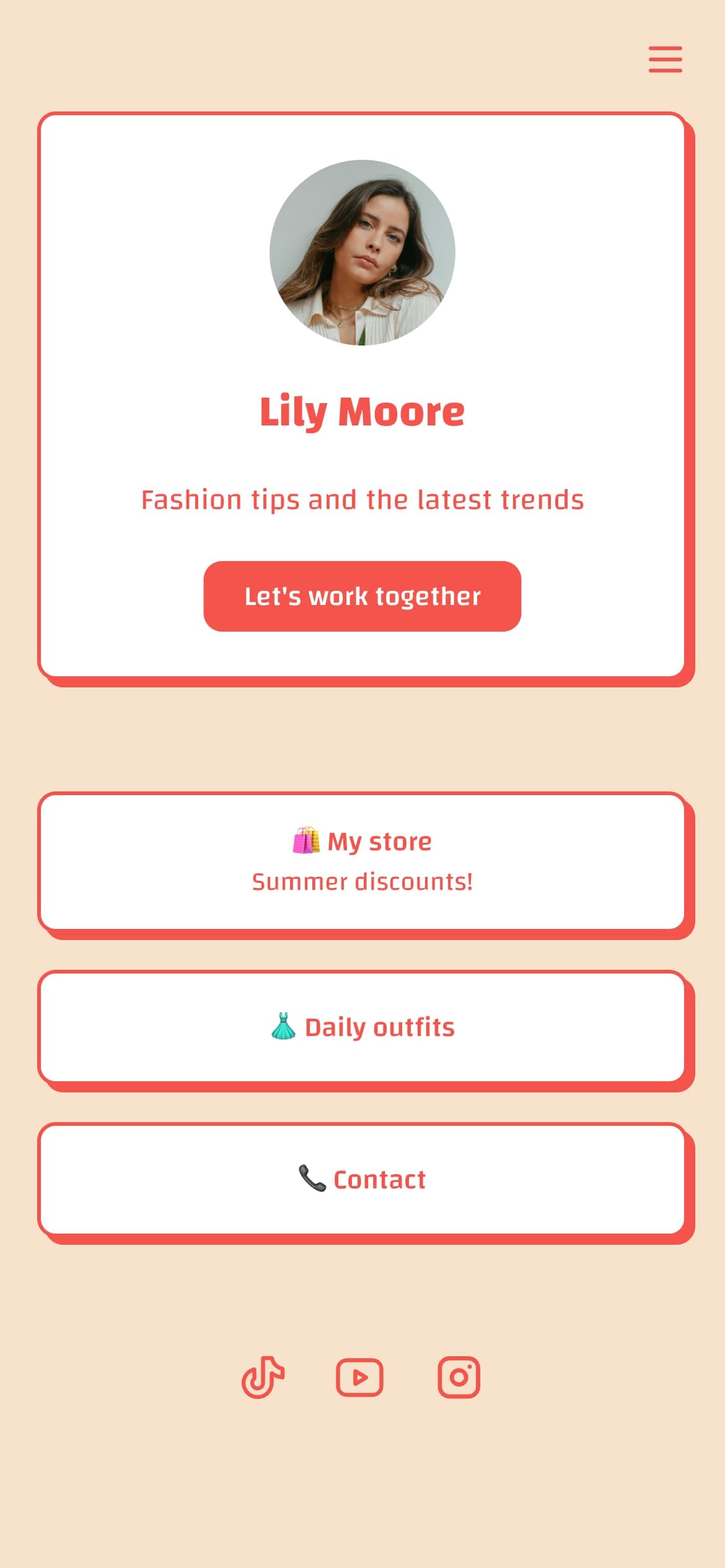
The Linktree classic. Sequential list of clickable buttons, full width, one above the other.
This is the most familiar pattern on the internet. Every visitor knows how to use it, which removes cognitive load from the experience. Stacked layouts work well when you need heavy information density and your audience scans vertically.
The downside: too many buttons create decision paralysis. When everything looks identical, nothing stands out. If you have 15 stacked links of equal weight, per-link click rates drop because visitors can't quickly identify what matters most.
Best for: Musicians with multiple streaming platforms, small businesses with standard pages, anyone with 5-7 simple links.
Grid Layout
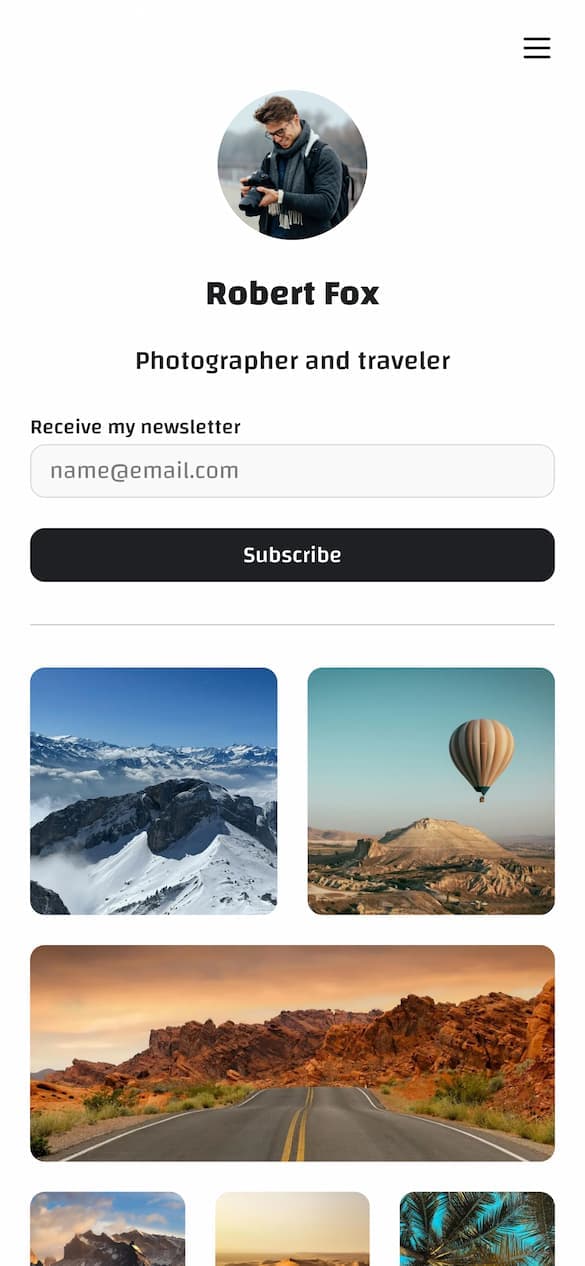
Two or three columns of equal-size tiles, often with icons or thumbnail images on each one.
Grids work well for visual creators: photographers, designers, portfolio-driven brands. The format lets images do the heavy lifting, making link decisions obvious at a glance. A grid tile with a Spotify icon and "Listen Now" communicates faster than a text-only button.
The trade-off is label space. Long link titles get cramped in grid tiles, and the format breaks down for non-visual content.
Best for: Photographers, designers, e-commerce brands, anyone whose links benefit from visual thumbnails.
Bento Box
Asymmetric grid with tiles of varying sizes, inspired by Apple's presentation style. One large featured tile surrounded by smaller supporting ones.
Bento layouts let you create clear visual hierarchy without relying on color alone. Your featured item (a new course, a flagship product, your latest video) gets a large tile with room for imagery and context. Supporting links sit alongside in smaller tiles.
The catch: bento layouts require more design skill to keep clean, especially on mobile screens. A poorly executed bento box looks cluttered rather than intentional.
Best for: Content-rich pages with one clear hero item, course creators, and brands that want their bio page to feel like a mini-website.
Canvas or Freeform
Drag-and-drop positioning anywhere on the page. Maximum design freedom with maximum responsibility for mobile responsiveness.
Canvas layouts let you build something that looks nothing like a typical link-in-bio page. That's both the strength and the risk. Designers and visual brands can create genuinely distinctive experiences. Everyone else tends to create messy pages that look great on desktop and fall apart on phones.
Best for: Designers, visual brands, anyone with strong opinions about layout and the skills to back them up.
Minimal or Single CTA
One dominant call-to-action, with two or three secondary links below it.
This is the highest-converting layout for a single goal. When all visual weight goes to one action (buy this course, join this newsletter, book this call), click-through rates on that action are significantly higher than any multi-link layout.
The limitation is obvious: you sacrifice everything else. If you have multiple important destinations, a single CTA layout forces you to pick one winner.
Best for: Anyone with one primary conversion goal. Course launches, newsletter growth, service bookings.
What the Data Actually Says
Research on link-in-bio conversion rates is still young, but directional data tells a consistent story.
Optimized bio link pages increase click-through rates by up to 350% compared to a bare website URL, according to data from BITHUB's analysis of bio link performance. That's the gap between sending Instagram visitors to a homepage and sending them to a purpose-built page.
Within bio pages themselves, the biggest factor isn't layout type. It's clarity. Link labels under 22 characters perform better than longer ones, according to Bio.ly's internal data. Shorter labels mean faster decisions, which means more clicks.
The "paradox of choice" applies directly here. A classic study by Sheena Iyengar and Mark Lepper found that a display with 6 jam options converted at 30%, while a display with 24 options converted at just 3%. The same principle plays out on bio pages: more links means more decisions, which means lower per-link click-through rates.
One important caveat: most published "data" on bio link conversions comes from individual platforms with limited sample sizes. Treat industry numbers as directional guidance. Your analytics on your audience is the only data that matters for your specific case.
Build Your Page in Minutes
Drag-and-drop editor with 18 content blocks, per-block styling, and custom themes.
Create your pageThe Design Principles That Actually Move the Needle
Layout type gets debated. These six principles don't. They apply regardless of which layout you choose.
1. Visual Hierarchy Above All
One action should be obviously the "main" thing on your page, whether through size, color, position, or a combination. If every button is the same size and color, nothing stands out and visitors distribute clicks evenly across all options rather than converting on your primary goal.
The fix is contrast. One bright, filled button for your primary CTA. Ghost-outlined or muted buttons for everything else. Your visitor's eye should land on the primary action within one second.
2. Mobile-First Is Non-Negotiable
85% of bio link clicks come from mobile devices. Design on desktop if you need to, but test on mobile first.
That means thumb-tappable buttons (44px minimum touch target), no horizontal scrolling, no tiny text requiring precision taps, and no elements that overlap on smaller screens. A grid layout that looks elegant on a 15-inch monitor but requires pinch-zooming on a phone is a grid layout that loses 85% of its audience.
3. Fewer Choices, Higher CTR on Your Top Goal
5-7 links is the sweet spot for most bio pages. More than 7 hits diminishing returns. Under 3 leaves clicks on the table for secondary goals.
Exception: if your goal is exploration (a portfolio, a content archive, an artist's discography), more links can work because the intent is browsing, not converting on a single action.
4. Label Clarity Beats Creativity
"Book a Call" beats "Let's Connect." "Shop Spring Collection" beats "Click here." "View Menu" beats "Explore Our Offerings."
Short, specific, and action-oriented. Under 22 characters. Tell visitors exactly what happens when they click. Save the clever copywriting for your Instagram captions. The full rules, templates, and 10 before/after examples are in the link-in-bio CTA writing guide.
5. Color That Serves the Design
High contrast between background and button text produces the highest accessibility and click rates. Matching your existing brand colors builds recognition and trust, especially for visitors who just came from your Instagram grid.
The most common mistake: too many competing colors. When everything is highlighted, nothing is. Pick one accent color for your primary CTA and keep everything else neutral.
For inspiration, check our website color palette guide.
6. Profile Photo Over Background Image
Your profile photo is the first thing visitors see. It builds instant trust and confirms they landed on the right page. A high-quality, recognizable profile image matters more than any background or hero image.
That said, a relevant background image can increase engagement when done well. Grid layouts in particular benefit from thumbnail images on each button to help visitors distinguish between options at a glance.
Which Layout Is Right for You?
Instead of debating layouts in the abstract, match yours to your goal and content type.
If you're a creator with one main offer (a course, a newsletter, a service), the minimal or single CTA layout gives all visual weight to your conversion action. Everything else is secondary.
If you're a photographer or designer, grid or bento layouts let visual thumbnails do the work. Images help visitors decide faster than text labels alone.
If you're a musician linking to streaming platforms and merch, stacked buttons handle sequential scanning well. Your audience knows the link types (Spotify, Apple Music, Bandcamp) and scans for the one they use.
If you're a small business (restaurant, salon, local service), stacked layouts with icons keep things simple and mobile-safe. Your audience wants a menu, a booking link, and a phone number, not a design showcase.
If you're a design-led brand where visual impression is part of the value proposition, canvas or freeform layouts let you stand out from every other Linktree clone. Just make sure it works on a phone.
The real question behind all of this: what is the ONE thing you want visitors to do? Build your design around that.
How to Test Your Layout Without Guessing
Opinions about design are cheap. Data is what counts. Here's how to test your layout with minimal effort.
Track the right metrics. Total page clicks, per-link click-through rate, and average clicks per session. If your primary CTA gets less than 30% of all link clicks, your hierarchy isn't working.
Change one variable at a time. Layout, then CTA label, then button color, then link order. If you change three things at once, you won't know what caused the improvement.
Wait 2-4 weeks before drawing conclusions. Daily fluctuations are noise. Weekly trends over 2-4 weeks are signal. Most bio link platforms have built-in analytics that make this straightforward.
Red flags to watch for. Every link has roughly equal clicks (no hierarchy working). Your top click is a social media link while your primary CTA sits at 5% (your core action isn't obvious enough). Scroll depth drops sharply after the first 3 links (too many options or weak ordering).
For platform-specific analytics advice, see our Instagram bio link guide.
Should You Switch Platforms for Better Design?
The design debate often comes down to a tool question: should you leave Linktree for something with more flexibility?
Switching platforms doesn't inherently improve conversions. A well-designed Linktree page with clear hierarchy and strong CTAs will outperform a poorly designed custom page every time.
But if your current tool restricts your design to the point where you can't implement visual hierarchy, can't customize beyond basic colors, or locks grid and bento layouts behind expensive tiers, a more flexible tool removes that ceiling.
The principles in this article apply regardless of platform. Hierarchy, clarity, mobile-first, label specificity. Get those right first, then worry about which tool gives you the design freedom to push further.
If you're evaluating options, see how to create a link-in-bio page for a setup walkthrough, or check our guide on what to put on your bio page for content strategy.
FAQ
Does link in bio design matter?
Yes. Optimized bio pages see 25-40% higher conversion rates compared to unoptimized ones. Layout, visual hierarchy, and mobile optimization are the three highest-leverage design factors.
What is the best layout for a link in bio page?
It depends on your goal. Single CTA layouts convert best when you have one primary action. Grid and bento work well for visual creators. Stacked buttons are the safest choice for most use cases.
How many links should I put on my link in bio?
5-7 is the sweet spot for most pages. More links reduce per-link click-through rates. Fewer links may miss secondary conversion opportunities.
Does a custom link in bio page convert better than Linktree?
Not automatically. Better design flexibility helps you implement good design principles, but the principles (hierarchy, clarity, mobile-first) matter more than the platform itself.
How do I make my link in bio look professional?
Three things: brand-consistent colors and fonts, a clear visual hierarchy where one action dominates, and short specific link labels. Everything else is secondary.
Design Is a Multiplier, Not a Fix
Worth flagging in context: Linktree's mid-June 2026 Sticker Bio Boards launch with the Olivia Rodrigo creator pack is a visual customization update, not a conversion update. Stickers can boost screenshot share rate and aesthetic cohesion for fan-driven cycles; they do not, by themselves, fix the fundamentals below.
Layout matters, but it multiplies the effect of good fundamentals. A bento layout with vague labels and no visual hierarchy won't outperform stacked buttons with a clear primary CTA.
Start with the fundamentals: define your one primary goal, build hierarchy around it, keep labels short and specific, test on mobile. Then experiment with layout types that match your brand and audience.
Change one thing, wait 2-4 weeks, check the analytics. Repeat.
Build Your Page in Minutes
Drag-and-drop editor with 18 content blocks, per-block styling, and custom themes.
Create your page