7 Website Color Palette Tools With Examples
 Marcel Cruz
Your website's color palette shapes how visitors feel about your brand before they've read a single word. These 7 tools make building one fast — from AI generators to community-curated libraries to precision color theory engines.
Each tool below includes what it's best at, who it's for, and what to watch out for. For inspiration on how color fits into broader design decisions, see our minimalist website examples.
1. Adobe Color
For designers, marketers, and creators already embedded in the Adobe ecosystem, Adobe Color is an indispensable powerhouse. It moves beyond being a simple palette generator to become a fully integrated part of a professional creative workflow, making it a top-tier choice for developing sophisticated website color palettes. While free to use with a basic Adobe account, its true strength is unlocked when connected to Creative Cloud applications like Photoshop, Illustrator, and XD.
The platform's interface is clean and user-centric, offering an interactive color wheel that’s both intuitive for beginners and robust for experts. You can instantly generate schemes based on classic color harmony rules like analogous, complementary, and triadic, ensuring your choices are grounded in color theory.
Standout Features
What truly sets Adobe Color apart is its seamless integration and advanced tooling.
- Extract from Image: Upload a photograph or brand image, and the tool intelligently pulls a harmonious color theme from it. This is perfect for ensuring your website’s colors align with your brand photography.
- Accessibility Tools: Before finalizing your palette, you can use the built-in contrast checker to ensure your text and background combinations meet Web Content Accessibility Guidelines (WCAG) standards. This proactive approach helps build a more inclusive website from the ground up.
- Creative Cloud Libraries: This is the killer feature. You can save your generated palettes directly to your Adobe Creative Cloud Libraries. This makes them instantly accessible across all your Adobe software, ensuring perfect color consistency from your website mockups in Adobe XD to your social media graphics in Photoshop.
Pros and Cons
| Pros | Cons |
|---|---|
| Seamless Integration: Direct sync with Adobe Creative Cloud apps streamlines the design process. | Learning Curve: Can feel overwhelming if you're not familiar with Adobe products. |
| Powerful Tools: Advanced features like accessibility checkers and theme extraction are built-in. | Requires Account: Full functionality and saving require a free or paid Adobe account. |
| Community Inspiration: Access to thousands of user-created palettes in the "Explore" tab. | Overkill for Simple Needs: May be too complex for users wanting a quick, one-off palette. |
Website: https://color.adobe.com/
2. Coolors
For creators and developers who value speed and simplicity, Coolors is the go-to platform. It excels at generating beautiful website color palettes in seconds, making it a favorite among freelancers, small business owners, and anyone needing quick inspiration without a steep learning curve. The interface is brilliantly straightforward: just press the spacebar to generate a new, harmonious color scheme instantly.
This super-fast generator is perfect for brainstorming sessions or when you need to break a creative block. You can lock colors you like and continue generating new options for the remaining swatches, refining your palette on the fly. While its core features are free, a premium version unlocks additional functionalities like advanced palette editing and management.
Standout Features
Coolors’ strength lies in its blend of speed, accessibility, and community-driven content.
- Rapid Generation: The core feature is its lightning-fast generator. A simple press of the spacebar cycles through thousands of palettes, making the process of finding the right colors fun and efficient.
- Extensive Library: Beyond generating your own, you can explore a vast, user-submitted library of pre-made palettes. This is an incredible resource for discovering trending color combinations and seeing how different hues work together in practice.
- Multiple Export Options: Once you've perfected your palette, you can export it in various formats, including PNG, PDF, SVG, and even SCSS code snippets. This makes implementation in web projects or design software incredibly straightforward.
- Mobile and App Integration: With dedicated apps for iOS and Android, plus extensions for Adobe and Figma, you can capture and use color inspiration wherever you are, seamlessly integrating it into your workflow.
Pros and Cons
| Pros | Cons |
|---|---|
| User-Friendly Interface: Exceptionally easy to use, making it ideal for beginners and experts alike. | Limited Advanced Tools: Lacks the in-depth accessibility checkers found in more robust platforms. |
| Rapid Palette Generation: The spacebar generator is perfect for quick brainstorming and decision-making. | Internet Connection Required: Core generation and library features depend on being online. |
| Excellent Free Version: The free offering is powerful enough for most everyday design needs. | Fewer Customization Controls: Professional designers might find the controls less granular than in tools like Adobe Color. |
Website: https://coolors.co/
3. Color Hunt
For those who value speed and inspiration over complex customization, Color Hunt is a treasure trove of community-curated palettes. It operates on a simple, brilliant premise: provide an endless, scrollable feed of beautiful four-color combinations that are updated daily. This makes it an ideal starting point for anyone seeking trendy and effective website color palettes without the friction of registration or navigating a complex interface.
It’s less of a tool and more of an open-access gallery. The platform thrives on its community contributions, resulting in a diverse collection that feels fresh and current. Whether you're a freelancer looking for a quick theme for a client project or a small business owner designing a new site, Color Hunt delivers immediate, usable inspiration.
Standout Features
What makes Color Hunt a go-to resource is its elegant simplicity and focus on discoverability.
- Daily Updates & Trends: The homepage features new, hand-picked palettes every day. You can also sort by what’s "Popular" or "Random" to discover thousands of high-quality schemes that have been vetted by the community.
- Simple Categorization: Looking for something specific? You can easily filter palettes by themes like "Pastel," "Neon," "Vintage," or even specific colors like "Blue" or "Gold." This helps you quickly narrow down options to fit your project's mood.
- One-Click Copy: The user experience is frictionless. Hovering over a palette reveals a "like" button and the number of favorites it has received. Clicking on any hex code instantly copies it to your clipboard, making the transfer to your design software or CSS file seamless.
Pros and Cons
| Pros | Cons |
|---|---|
| Excellent Source of Inspiration: An almost endless supply of trendy, user-voted palettes. | Limited Customization: You cannot adjust or build upon the palettes within the platform. |
| Completely Free & No Account: Instantly accessible to everyone without any sign-up requirement. | No Software Integration: Lacks direct syncing capabilities with tools like Figma or Adobe XD. |
| Fast and Lightweight: The simple interface loads quickly and is incredibly easy to navigate. | No Advanced Tools: Does not include features like accessibility checkers or theme extraction. |
Website: https://colorhunt.co/
4. Paletton
For the designer who loves the science behind the art, Paletton is a classic tool that offers a deep dive into color theory. It forgoes the simplicity of many modern generators in favor of giving users granular control over their color relationships. This makes it an exceptional choice for creating intricate and theoretically sound website color palettes that are built on a solid foundation of harmony.
The platform is completely free to use without any registration required, making it instantly accessible. Its core is a highly interactive color wheel that allows you to select a base color and then explore monochromatic, adjacent, triadic, and tetradic relationships with unparalleled precision.
Standout Features
Paletton’s strength lies in its detailed customization and practical previewing capabilities.
- Fine-Tuning Controls: Unlike generators that give you fixed results, Paletton lets you adjust the distance between hues on the color wheel, as well as modify the saturation and brightness of your entire scheme with simple sliders. This allows for nuanced, custom palettes.
- Live Preview: See your chosen colors in action immediately. The tool includes a "Examples" tab that shows how your palette would look on a sample website, in artwork, or as animated circles, giving you instant context for your choices.
- Accessibility Simulation: Paletton includes a valuable feature to simulate how your color scheme will appear to people with different types of color vision deficiencies, such as deuteranopia or protanopia. This is a crucial step in ensuring your design is inclusive, a core component of inclusive web design.
- Multiple Export Options: Once you’ve perfected your palette, you can export it in various formats, including CSS, LESS, SASS, XML, or as a simple PNG swatch, making it easy to implement in your development workflow.
Pros and Cons
| Pros | Cons |
|---|---|
| Deep Control: Unmatched fine-tuning over color relationships. | Complex Interface: Can be intimidating for beginners new to color theory. |
| Free and Accessible: No account or payment required for full use. | No Software Integration: Lacks direct syncing with tools like Adobe or Figma. |
| Powerful Previews: Live examples help visualize the final design. | Dated UI: The interface feels less modern compared to newer platforms. |
Website: https://paletton.com/
5. Khroma
For creators seeking a truly personalized and serendipitous approach to color discovery, Khroma offers an innovative, AI-driven experience. Instead of starting with a color wheel or a blank slate, you begin by training an artificial intelligence algorithm on your unique taste. This makes it a fantastic tool for generating highly customized website color palettes that feel both surprising and instinctively right, moving beyond conventional color theory rules.
Khroma is entirely free to use and requires no registration, making it accessible for anyone to jump in and start exploring. The platform asks you to pick 50 of your favorite colors from a wide spectrum, which it then uses to generate an endless scroll of combinations tailored specifically to you.
Standout Features
What makes Khroma a standout choice is its unique AI-powered methodology and intuitive display modes.
- AI-Driven Personalization: The core of Khroma is its neural network. By learning your preferences, it generates combinations you are statistically likely to appreciate, providing a powerful source of inspiration that aligns with your personal aesthetic.
- Multiple Display Modes: You can view the generated palettes in several useful contexts, including as typography on a colored background, as four-color posters, or as smooth gradients. This helps you visualize how the colors will work in a real-world design scenario.
- Save and Export: As you discover combinations you love, you can save them to a personal library within the browser. Each color comes with its hex code and RGB values, making it easy to copy and implement them directly into your website’s CSS or design software.
Pros and Cons
| Pros | Cons |
|---|---|
| Unique, Tailored Combinations: AI generates palettes based on your personal taste. | Initial Setup is Time-Consuming: You must choose 50 colors to properly train the algorithm. |
| Free with No Registration: Instantly accessible to everyone without creating an account. | Limited Control: You are reliant on the AI's suggestions and cannot manually tweak the palettes. |
| Innovative and Inspiring: The endless scroll format encourages discovery and serendipity. | Offline Use is Limited: While it can work offline after initial setup, the full experience is online. |
Website: https://www.khroma.co/
6. Colormind
Colormind takes a different approach to palette generation: instead of color theory rules, its AI is trained on photographs, films, and popular art — which means the results feel organic and human rather than mathematically computed. It's free, requires no signup, and produces solid website color palettes in a single click.
Colormind's core strength is its simplicity and its ability to generate schemes with a single click. The platform presents a clean, minimalist interface focused on a live website mockup, showing you exactly how your potential colors will interact in a real-world UI context. This immediate visual feedback is invaluable for making quick decisions and testing different moods for your project.
Standout Features
What makes Colormind so effective is its intelligent generation process combined with practical application.
- AI-Powered Generation: Unlike tools based solely on mathematical color rules, Colormind's AI is trained on real-world design examples. This results in palettes that have a more human, artistic touch and are often more harmonious in practice. The model is updated daily, so the inspiration never gets stale.
- Live UI Preview: The platform instantly applies your generated palette to a mock website template. This allows you to see how your primary, accent, and neutral colors work together as buttons, text, and backgrounds, which is crucial for UI and web design.
- Lock and Customize: If you like a specific color in the generated palette, you can "lock" it in place. When you generate a new palette, the AI will build a fresh, complementary scheme around your locked color, giving you a degree of creative control over the final output.
Pros and Cons
| Pros | Cons |
|---|---|
| Natural Color Schemes: AI generates combinations that feel organic. | Limited Control: You can't fully dictate the AI's selection process. |
| Free and No Registration: Instantly accessible to anyone online. | No Direct Integrations: Lacks integration with design software like Figma. |
| Practical UI Previews: See your colors in a realistic web layout. | Fewer Advanced Tools: Missing features like in-depth accessibility checkers. |
Website: http://colormind.io/
7. Canva Color Palette Generator
For content creators, small business owners, and marketers who value speed and simplicity, the Canva Color Palette Generator is a wonderfully straightforward tool. It excels at one primary function: instantly extracting beautiful color schemes from any image you upload. This makes it an ideal starting point for anyone looking to build website color palettes that are directly inspired by a specific photograph, logo, or piece of artwork.
The user experience is incredibly simple. You just drag and drop your image, and the generator immediately presents a five-color palette complete with names and hex codes. While it lacks the complex customization of other platforms, its strength lies in its frictionless, no-nonsense approach. It’s completely free to use, and you don’t even need a Canva account to get started.
Standout Features
Canva's tool is all about speed and direct application, making it a favorite for quick design tasks.
- Instant Image Extraction: The core feature is its ability to pull a harmonious palette from an uploaded image in seconds. This is perfect for aligning your website's look with your brand's key visuals or a specific mood you want to evoke.
- Seamless Canva Integration: If you are a Canva user, you can take the generated hex codes and immediately apply them to your designs within the Canva platform. This creates a smooth workflow from inspiration to creation.
- Simplicity and Accessibility: There is virtually no learning curve. The interface is clean, self-explanatory, and provides exactly what you need-hex codes-to get started on any web project, which is a key part of developing a consistent visual identity.
Pros and Cons
| Pros | Cons |
|---|---|
| Extremely Easy to Use: The drag-and-drop interface is perfect for beginners. | Limited Customization: You cannot adjust the generated colors. |
| Fast and Efficient: Provides instant results for quick projects. | Fixed Palette Size: Always generates exactly five colors. |
| No Account Required: Completely free and accessible to everyone. | Lacks Advanced Tools: No features like accessibility or contrast checkers. |
Website: https://www.canva.com/colors/color-palette-generator/
Top 7 Website Color Palette Tools Comparison
| Tool | Implementation Complexity 🔄 | Resource Requirements ⚡ | Expected Outcomes 📊 | Ideal Use Cases 💡 | Key Advantages ⭐ |
|---|---|---|---|---|---|
| Adobe Color | Moderate – requires Adobe familiarity | Moderate – Adobe account needed | Cohesive, professional palettes for Adobe CC | Professional and beginner designers | Seamless Adobe integration, comprehensive |
| Coolors | Low – very intuitive | Low – internet connection needed | Fast palette generation, multiple exports | Quick ideation and mobile use | Speedy, user-friendly, cross-platform |
| Color Hunt | Very low – simple UI | Very low – no registration | Trendy, community-curated palettes | Inspiration without customization | Free, no signup, frequent updates |
| Paletton | High – tailored for color theory pros | Low – no registration required | Detailed, complex, harmonious palettes | Advanced users needing precise control | Deep customization, accessibility features |
| Khroma | Moderate – requires initial setup | Low – free with no signup | AI-personalized palettes | Users seeking unique, evolving suggestions | AI-driven, personalized, offline use |
| Colormind | Moderate – manual tweaks possible | Low – no signup | Natural, aesthetic palettes for UI/web | UI and web designers needing inspired combos | AI-inspired, continuous updates |
| Canva Color Palette Generator | Very low – simple and quick | Very low – no registration | Quick image-based palette extraction | Canva users and beginners needing quick palettes | Fast, image-based, Canva integration |
From Palette to Published: Putting Your Colors into Action
We've explored a powerful lineup of tools designed to demystify color theory and streamline the creation of stunning website color palettes. From the comprehensive ecosystem of Adobe Color to the rapid-fire generation of Coolors and the curated, trend-focused collections on Color Hunt, the path from a blank canvas to a vibrant, emotionally resonant design has never been clearer.
The key takeaway is that color selection is not an arbitrary choice; it's a strategic decision. Your palette is a powerful communication tool that speaks volumes about your brand’s personality, values, and the experience you promise your audience. Whether you're a small business owner aiming for a trustworthy and professional feel or a content creator building a bold, energetic brand, the right colors lay the essential groundwork for connection and recognition.
Your Next Steps: From Inspiration to Implementation
With these tools at your disposal, the next step is to bridge the gap between inspiration and action. A perfect palette is only effective once it's consistently and thoughtfully applied across your digital presence.
Here's a simple roadmap to guide you:
- Define Your Brand's Core Message: Before opening any tool, revisit your brand's mission and the emotions you want to evoke. Are you innovative, traditional, calming, or high-energy? This will be your compass for choosing colors.
- Select the Right Tool for the Job: Your specific needs will dictate the best starting point.
- For Deep Customization: Use Paletton or Adobe Color if you have a primary color in mind and need to build a comprehensive, theoretically sound scheme around it.
- For Rapid Inspiration: Turn to Coolors or Khroma when you need to quickly generate and compare a wide variety of AI-powered options.
- For Trend-Focused Curation: Browse Color Hunt to see what palettes are currently popular and effective in the design community.
- For All-in-One Design: Use the Canva Color Palette Generator if you plan to immediately apply your chosen colors to social media graphics, presentations, or other marketing materials within the Canva ecosystem.
- Test for Accessibility and Usability: Once you have a palette, don't forget the final, crucial test. Use a contrast checker to ensure your text is legible against your background colors. A beautiful design fails if it's not accessible to everyone.
Key Insight: The most effective website color palettes are born from a blend of creative intuition and strategic thinking. Use these tools not just to find colors you like, but to find colors that work for your brand and your audience.
Choosing your colors is a foundational step in building a memorable online identity. It’s an exciting process that infuses your brand with personality and sets the stage for every piece of content you create. Trust your instincts, lean on the power of these tools, and build a digital presence that is not only beautiful but also undeniably you.
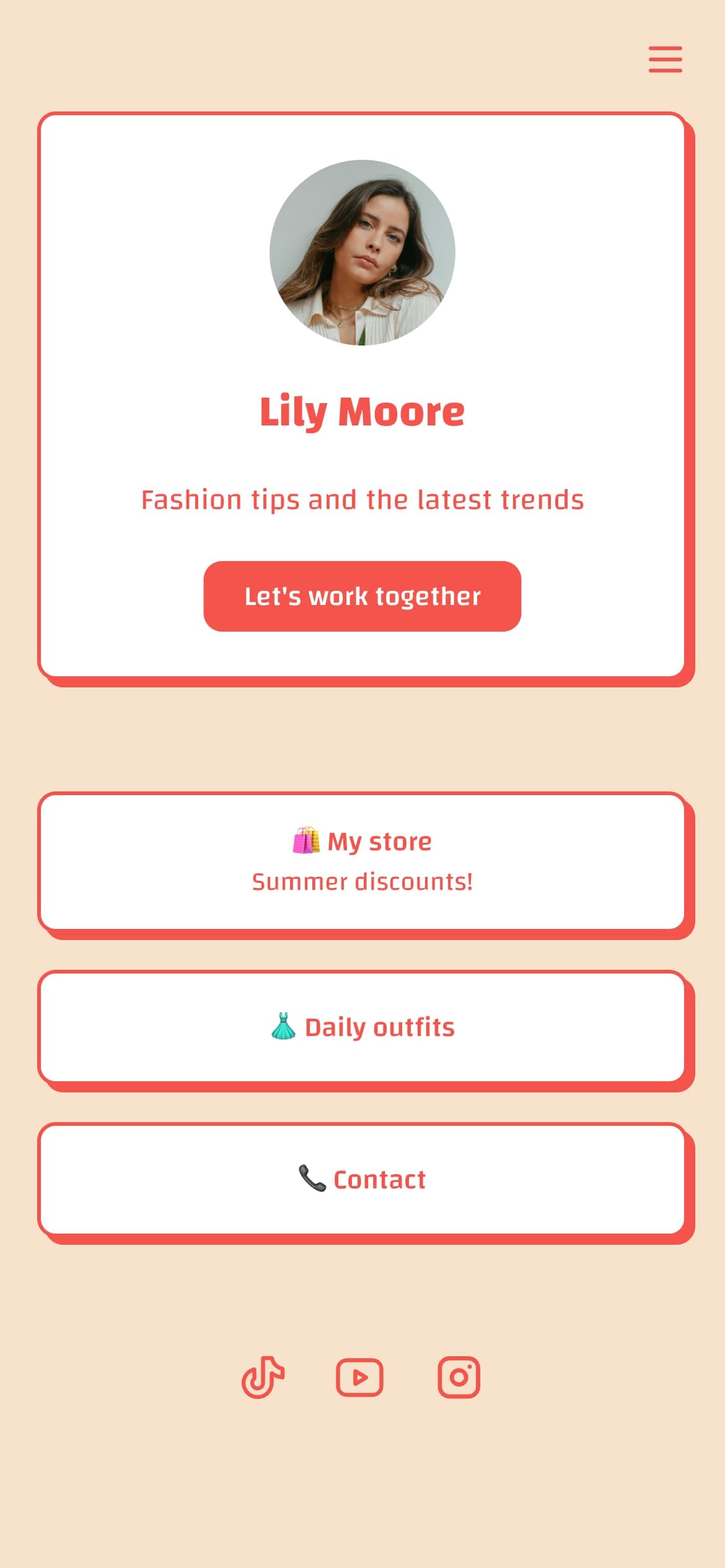
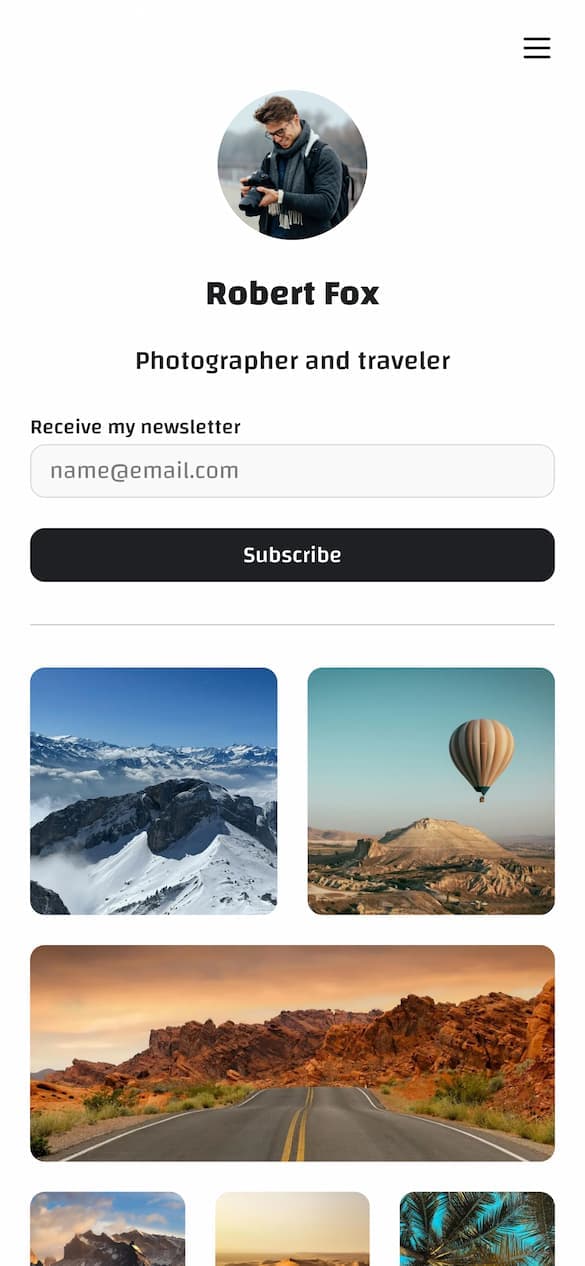
Now that you've crafted the perfect color palette, ensure it shines on a "link in bio" page that reflects your unique brand identity. With Linkero, you can go beyond basic link lists and create a beautiful, fully customizable microsite using your newly chosen colors, fonts, and layouts. Bring your brand to life and make a powerful first impression by visiting Linkero to build your stunning, on-brand landing page today.