Link in Bio for Freelancers: Your Portfolio, Services, and Booking in One Page
 Marcel Cruz
Most freelancers fall into one of two camps: they built a portfolio website three years ago and haven't touched it since, or they never built one at all. Either way, potential clients land on a dead end. A link in bio for freelancers solves this by turning a single URL into a live portfolio, services page, and booking hub that you'll actually keep updated.
With 1.57 billion freelancers worldwide (DemandSage, 2025) and spring being peak side-hustle season, the timing couldn't be better. Here's how to set up a bio page that replaces the website you don't have time to maintain.
Why Freelancers Need More Than a Link List
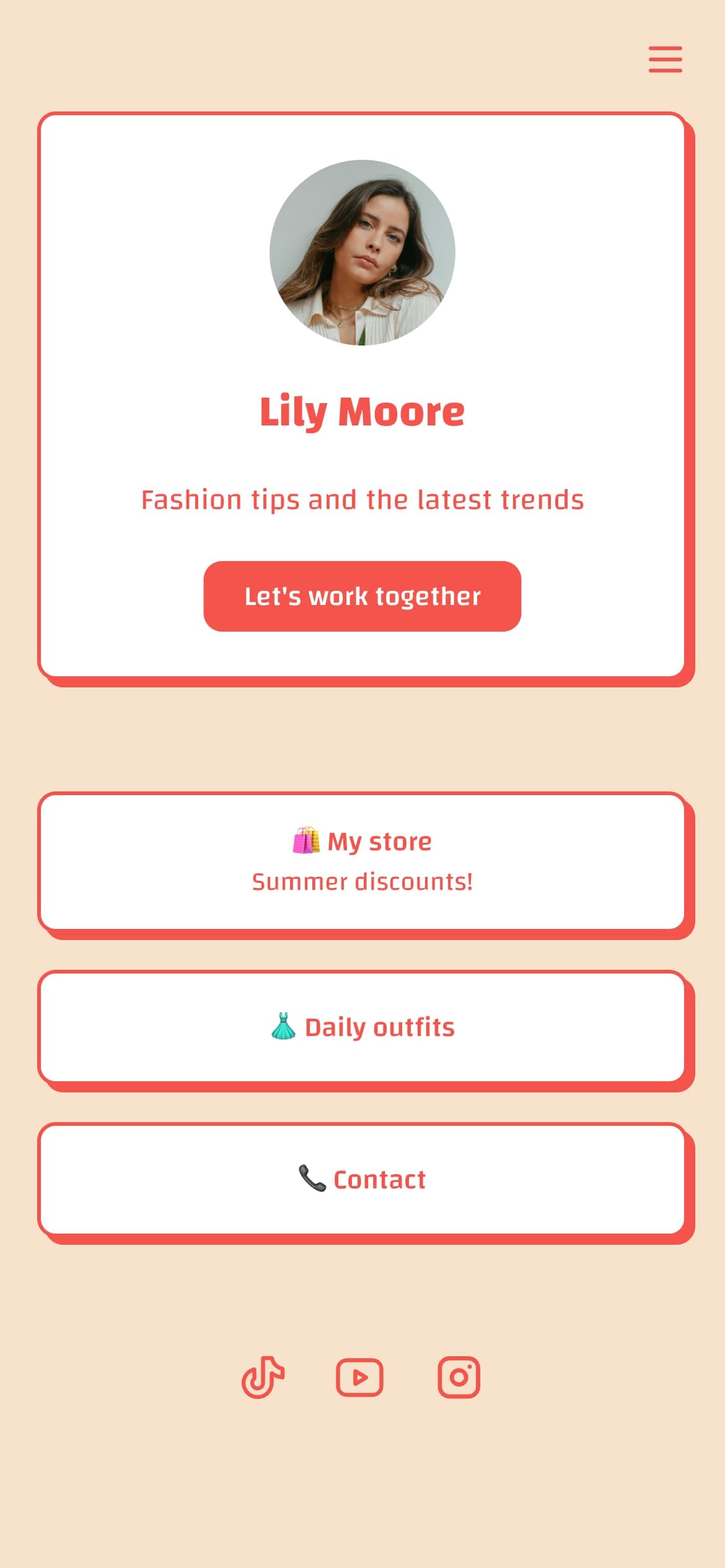
The default assumption is that a link-in-bio page means a vertical list of URLs pointing to your social profiles. That's fine if you're a content creator funneling followers to YouTube and TikTok. For freelancers, it's almost useless.
A potential client clicking your bio link wants to answer three questions fast:
- What do you do? Your specialty, your niche, your positioning.
- Are you any good? Portfolio samples, testimonials, results.
- How do I hire you? A booking link, contact form, or clear next step.
A list of social profile links answers none of those. You need sections, not links. That means choosing a tool that supports blocks: portfolio grids, text sections, embedded booking, testimonials, and contact forms.
What to Put on Your Freelancer Bio Page
If you're not sure where to start, here's the structure that works. For a broader overview of bio page content, check our general guide to what goes on a bio page. This section goes deeper for freelancers specifically.
Header and Bio
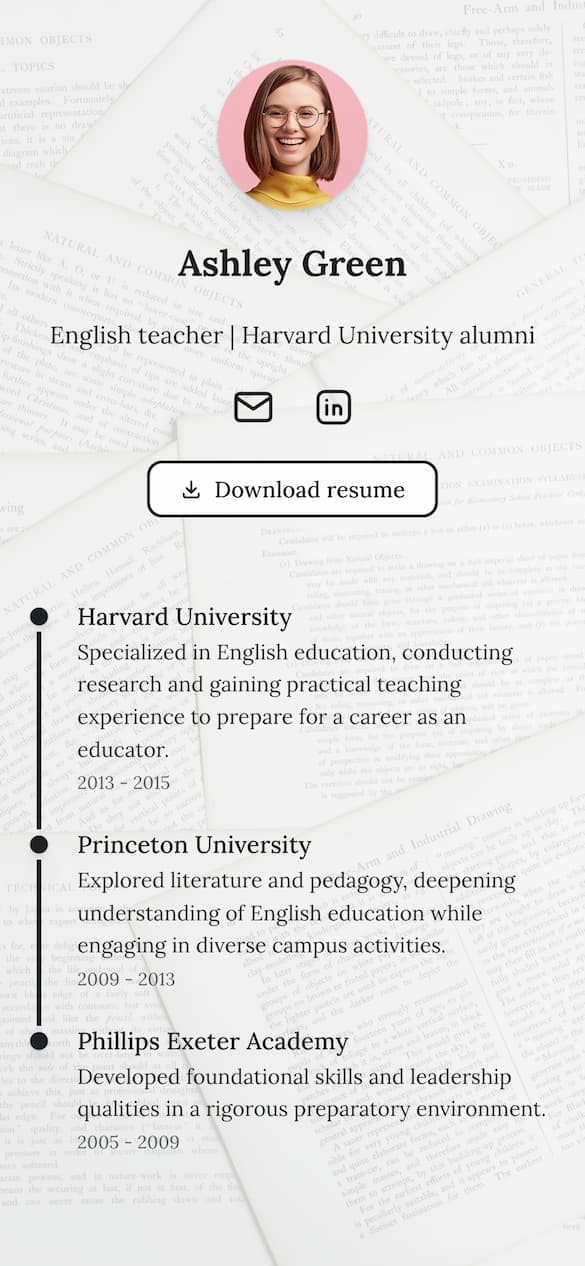
Your name, your specialty, one sentence about who you help. This goes above the fold. No fluff, no "passionate creative professional."
Good: "Brand designer for early-stage startups. Fast turnarounds, fixed rates."
Bad: "Creative visionary with a passion for helping brands tell their stories through visual narratives."
The first example tells a client exactly what you do and for whom. The second tells them nothing.
Portfolio Section
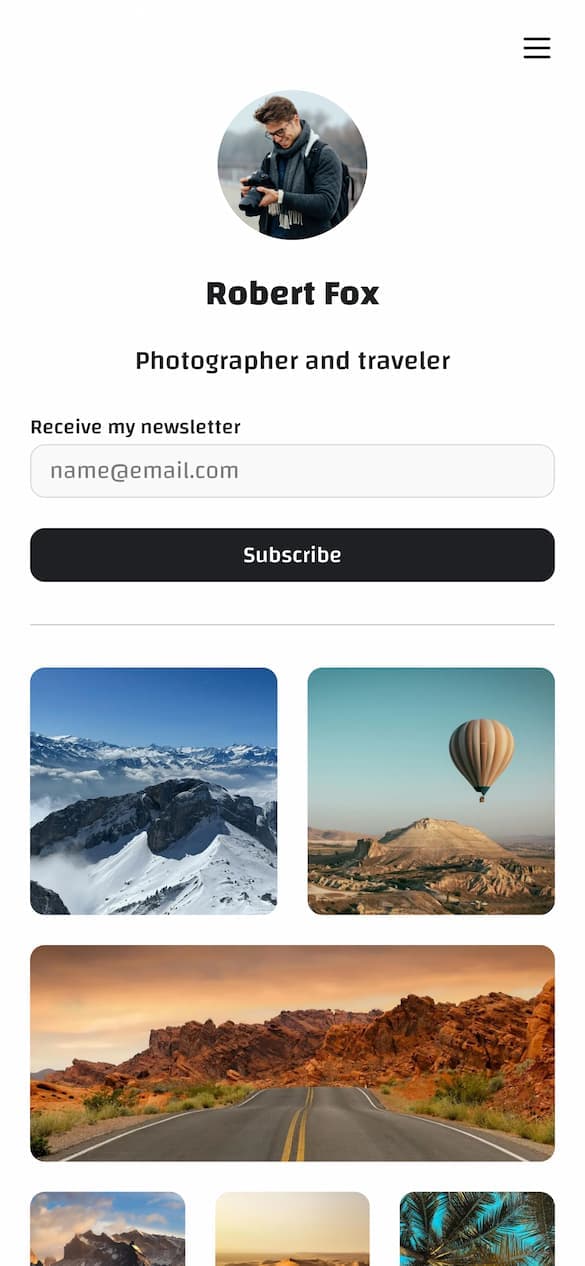
Show your 3 to 5 best pieces. Not 15, not "everything I've ever made." Curate ruthlessly: only include the type of work you want more of.
For designers, this means screenshot thumbnails with project names. For writers, published clips with publication name and a one-line summary. For developers, live URLs or GitHub repos with a brief description of what each project does.
Quality over quantity. A portfolio of five strong pieces signals confidence. A portfolio of twenty signals that you can't prioritize.
Services and Scope
List what you offer using short, specific labels. "Brand identity design" and "Landing page copy" beat "I offer a wide range of creative services." If you have productized packages (fixed scope, fixed price), show them. They filter out mismatched clients before either of you wastes time on a discovery call.
Social Proof
Even one strong testimonial from a real client builds more trust than any headline you write yourself. Include the client's name and company when possible. If you're brand new: a concrete result ("redesigned checkout flow that increased conversions by 23%") works as proof of competence.
Booking or Contact
This is where most freelancer bio pages fail. The portfolio looks great, the services are clear, and then there's... nothing. No way to take the next step.
Add a Calendly link for intro calls, a contact form for project inquiries, or at minimum an email button. One tap between "interested" and "contacted." Every extra step loses potential clients.
Optional: Pricing or Process
If you do fixed-price work, show your starting rates. This saves time for both sides. If your work is custom-scoped, show your process instead: "1. Discovery call → 2. Proposal → 3. Kickoff → 4. Delivery." It sets expectations without committing to a number.
Build Your Page in Minutes
Drag-and-drop editor with 18 content blocks, per-block styling, and custom themes.
Create your pageBio Page Setup by Freelancer Type
The sections above apply to every freelancer. The specifics depend on what you do. Photographers have additional considerations around portfolio preview and seasonal booking cycles — see our bio page guide for photographers for that niche specifically.
Designers
Lead with visuals. A portfolio grid of 4 to 6 projects with clean thumbnails and short descriptions does most of the selling. List services with clear scope ("Brand identity," "UI/UX design," "Social media graphics") and link a Behance or Dribbble profile as a secondary reference, not your primary portfolio. Keep visitors on your page.
Add a Calendly link for intro calls and at least one testimonial from a startup or small business client.
Writers
Your portfolio section should feature 3 to 5 published clips. Include the publication name and a one-line description for each: "500-word SaaS case study for Acme Corp" gives more context than a bare link. List your services by niche: "Blog articles (SaaS)," "Website copy," "Email sequences."
Writers often prefer async communication, so a project brief form (scope, timeline, budget range) works better than an open-ended "email me" button. Include your LinkedIn profile link since writers frequently get hired through LinkedIn.
Developers
GitHub is your portfolio. Feature 2 to 3 projects with live URLs and one-line descriptions: "Next.js SaaS boilerplate, deployed in 48 hours" says more than a paragraph of explanation. List your stack and services clearly: "MVP development," "API integrations," "Code audits."
If you do fixed-scope work, show a rate card or "starting from" pricing. Developers who publish rates attract clients who've already qualified themselves on budget.
Consultants and Coaches
Lead with credentials and results, not just services. Numbers matter: "Helped 40+ founders close their first enterprise deal" or "10 years in B2B SaaS growth." Your primary CTA should be a booking link for discovery calls since consulting is sold through conversation.
Add a case study or results section. Even one detailed example of a client outcome beats five generic testimonials. If you publish content, add a newsletter signup as a secondary CTA.
Can a Bio Page Replace a Website?
For many freelancers, especially early-stage: yes, with caveats.
What a bio page does just as well: portfolio display, services listing, booking integration, social proof, contact information. These cover 90% of what a basic portfolio website does.
What a bio page does better: updates are instant (no waiting on a developer or fighting with WordPress), it's mobile-first by default, and there's zero hosting or maintenance overhead. When you close a new project, you add it to your page in two minutes. When was the last time you updated your website that fast?
Where a website still wins: SEO for location-specific services ("NYC brand designer"), long-form case studies with multiple images and data, and building domain authority over years. A bio page won't rank for competitive service keywords.
The honest take: start with a bio page. If you're turning away clients because you don't have a website, you already have enough work to justify building one. Until then, a well-built bio page handles everything you need. For a step-by-step walkthrough of creating your first page, see our bio page setup guide.
Average Freelancer Bio Page vs. a Great One
| Average | Great |
|---|---|
| Lists every service ever offered | Shows only the work they want more of |
| Generic headline: "Freelance designer available for hire" | Specific positioning: "Brand identity for early-stage startups" |
| Portfolio of 15+ projects | Best 5, curated ruthlessly |
| Contact form buried at the bottom | Booking link above the fold |
| No social proof | At least one strong client testimonial |
| Static, last updated 8 months ago | Updated every time a new project ships |
The difference between these two columns isn't talent or budget. It's intention. A great freelancer bio page is built like a landing page, not a social media profile.
FAQ
Do freelancers need a website or can they use a link-in-bio page?
For early-stage freelancers, a bio page covers everything a basic portfolio website does with a fraction of the setup time. Once you have steady clients and want to rank in Google for service keywords, add a website. Not before.
What should a freelancer put on their bio page?
At minimum: your specialty in one sentence, 3 to 5 portfolio pieces, a clear services list, a way to book or contact you, and one testimonial or result.
How do you use a link-in-bio page to get freelance clients?
Treat it as your primary sales page. Link to it in every outreach email, put it in your social bios, and reference it when networking. The page itself should do the selling so you don't have to explain your work in every DM.
What is the best link-in-bio tool for freelancers?
Look for block-based builders that support portfolio sections, testimonials, booking embeds, and contact forms. A basic link list won't cut it for freelancers who need a full client-facing hub. Check current pricing and features to compare options.
Can a link-in-bio page replace a portfolio website?
For most early freelancers, yes. When you need SEO for service keywords or want to publish long-form case studies, add a dedicated website. But don't wait for the perfect website before you start landing clients.
How do you create a portfolio without a website?
Use a block-based bio page tool. Add a portfolio section with your best 5 pieces, a services section with clear scope, and a booking link. If you've been using a plain link list tool, it's worth upgrading to something with real content blocks.
Your Next Step
Most freelancers either over-invest in a website they never update or under-invest in having no online presence at all. A bio page built right is the middle path: professional enough to win clients, fast enough to actually maintain, and live from today instead of "whenever I get around to finishing that website."
The key is treating it like a landing page, not a social media profile. Show your best work, make it easy to hire you, and update it every time you ship something new.
Create Your Link-in-Bio Page
All your content in one customizable page. 18 content blocks, custom domains, and built-in analytics.
Create your page