Virtual Business Card Link in Bio for Founders
 Marcel Cruz
A virtual business card link in bio gives founders something most creator-style pages do not: context, proof, and a clear next step in one clean URL. If someone lands on your profile from X, LinkedIn, a podcast, or a warm intro, they should instantly understand who you are, what you’re building, and what they should do next.
That is the whole game. Not a rainbow stack of social buttons. Not a cringe little shrine to “personal brand.” A founder page should work like a compact professional homepage: short positioning, the right links, proof you’re real, and one or two actions worth taking.
What founders actually need from a bio page
Founders do not use a bio link the same way creators do.
A creator page is usually built to fan traffic outward: latest video, affiliate link, merch, newsletter, repeat. A founder page has a different job. It needs to help investors, clients, partners, hires, and curious strangers make sense of you quickly.
That means your page should answer four questions fast:
- Who are you?
- What are you building or selling?
- Why should anyone trust you?
- What should happen next?
If the page misses those four, it is not a founder asset. It is just a link pile wearing a blazer.
According to MySignature’s breakdown of digital business cards, the real value of a digital card is not just contact sharing. It is that one mobile-friendly page can hold contact details, social links, portfolios, scheduling tools, and company resources in one place. That is much closer to what founders need than the old “here are my socials” model.
Why generic creator pages feel wrong for founders
A lot of link-in-bio tools still assume you are trying to funnel followers to content. That is fine for influencers. It is weird for founders.
The common problems:
- they feel social-first instead of business-first
- they prioritize lots of equal links instead of one clear CTA
- they are weak on trust signals like testimonials, logos, or product proof
- they look temporary, which is the last thing you want if someone might hire, invest in, or introduce you
This is why plenty of founder pages feel slightly off even when they are technically functional. The structure is wrong.
A founder usually needs a hybrid:
- lighter than a full website
- more credible than a generic creator page
- faster to update than a custom homepage
That middle ground is the sweet spot.
Virtual business card link in bio: what is the difference?
This is where people get sloppy with language.
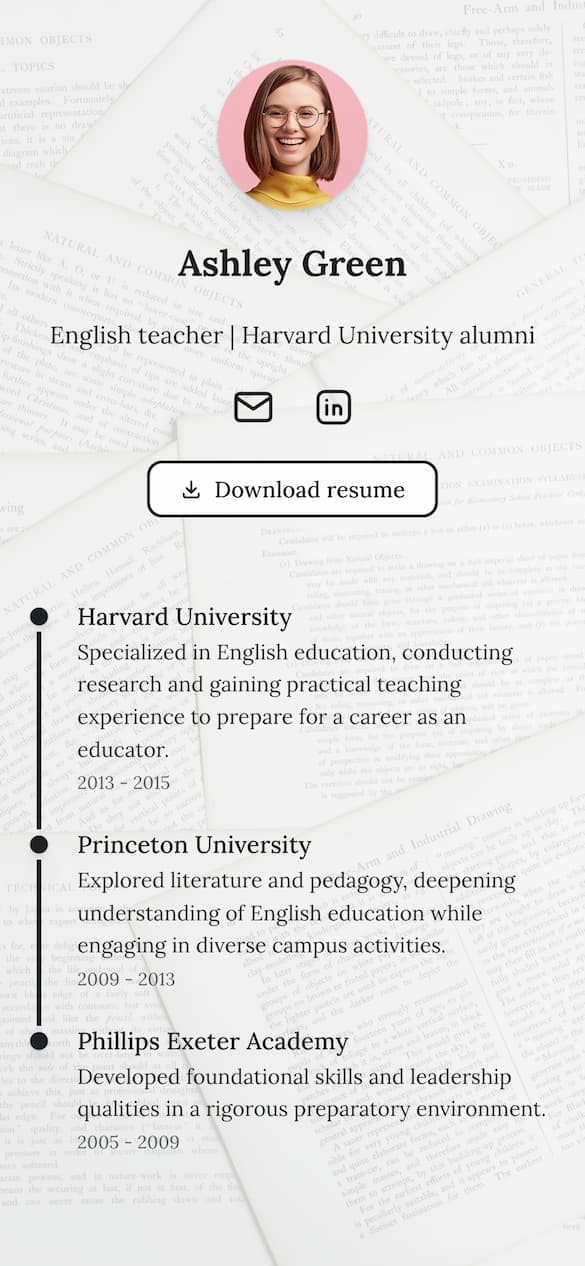
A digital or virtual business card is usually framed as a professional contact page. Name, role, company, contact details, maybe a QR code, maybe a scheduling link. Kado’s founder-focused guide leans hard into this use case: founders sharing pitch decks, demo videos, calendars, and portfolio details from one page.
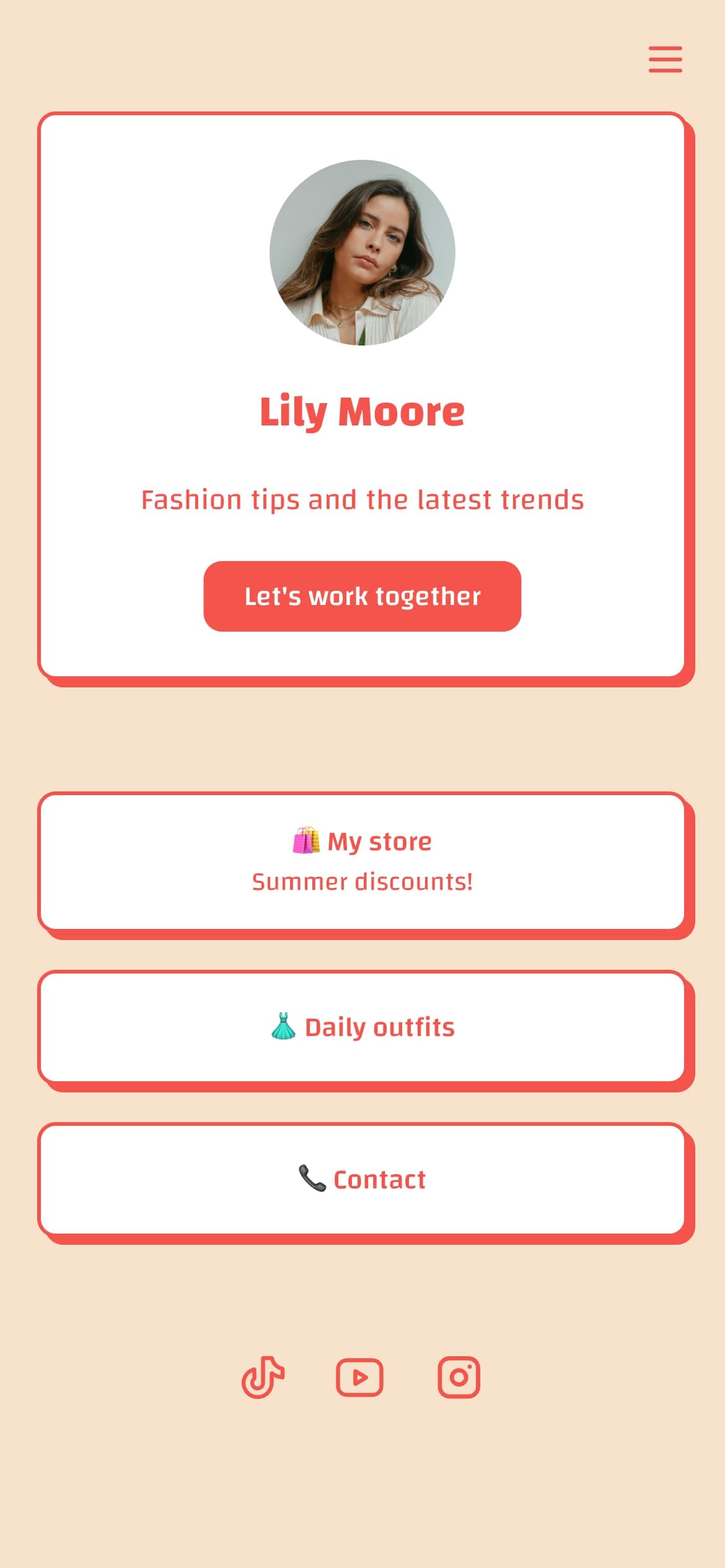
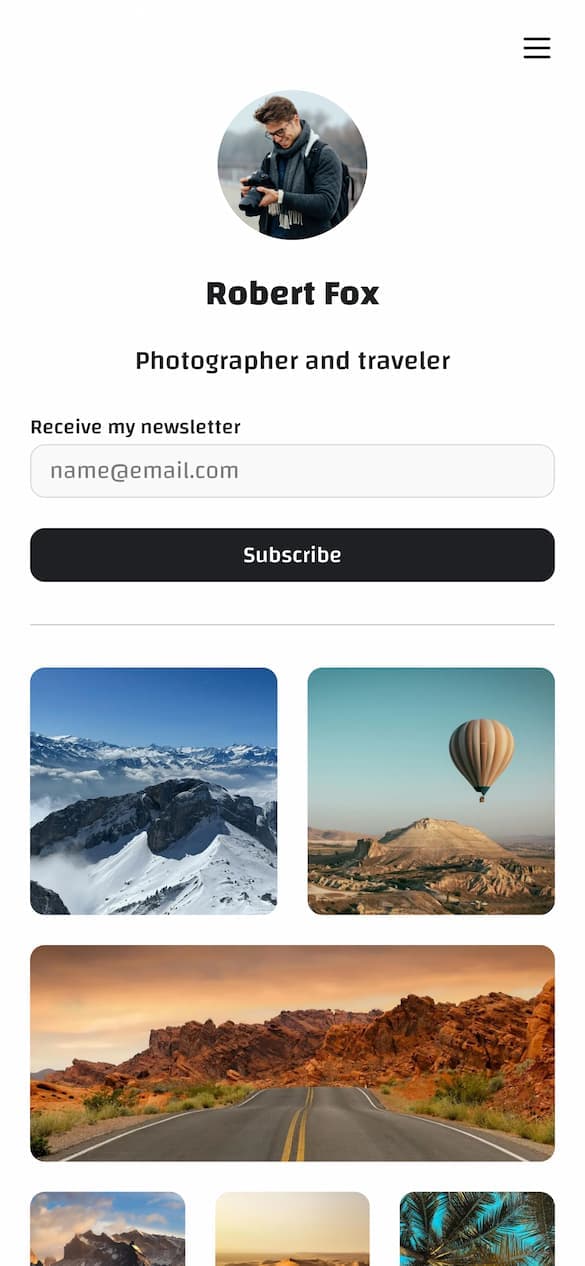
A link in bio page usually starts from the creator-tool world: one URL that expands into multiple destinations.
For founders, the best version is a blend of both.
A virtual business card is stronger on:
- identity
- contact sharing
- professional presentation
- quick trust-building
A link in bio is stronger on:
- managing multiple destinations
- updating offers and campaigns fast
- routing traffic from social profiles
- handling different visitor intents from one URL
The best founder setup combines both
You want the professionalism of a virtual business card with the flexibility of a link-in-bio page.
That means one page with:
- your role and one-line positioning
- key links to product, deck, booking, newsletter, or case studies
- proof elements like logos, press, traction, testimonials, or screenshots
- a clean contact path
That is not overkill. That is just adult supervision.
What to put on a founder bio page
If your founder page is blank and staring at you like a dead fish, start here.
1. One-line positioning
Above the fold, say what you do in plain English.
Good examples:
- Founder of a CRM for independent recruiters
- Helping B2B SaaS teams fix churn before it wrecks growth
- Building tools for creators who are tired of rented platforms
Do not waste the first line on vague motivational sludge.
2. One primary CTA and one secondary CTA
A founder page should not present twelve equal options.
Pick one main action, then one backup.
Common combinations:
- Book a call + View product
- See the deck + Email me
- Start free + Read the case study
- Join the newsletter + Connect on LinkedIn
That is enough. More than that and the page starts to feel indecisive.
3. Proof
This is where most founder pages either win trust or die quietly.
Useful proof blocks:
- customer logos
- short testimonial
- media mention
- revenue or user milestone
- product screenshot
- short case-study link
You do not need to show off. You do need to prove you are not just another guy with a bold font and a domain.
4. Featured links, not every link
Your founder page is not Dropbox for your internet presence.
Feature the links that actually move a conversation forward:
- product
- booking link
- pitch deck
- investor memo
- newsletter
- flagship case study
If a link does not support trust, contact, or conversion, cut it.
5. Contact options
Make contacting you stupidly easy.
Depending on your use case, that could be:
- email button
- calendar embed or booking link
- contact form
- WhatsApp or Telegram for warmer traffic
If someone needs three clicks and a spiritual awakening to reach you, the page failed.
Build Your Page in Minutes
Drag-and-drop editor with 18 content blocks, per-block styling, and custom themes.
Create your pageFounder bio-page examples and templates
The exact layout changes by founder type, but the structure stays the same.
Solo SaaS founder
Best layout:
- headshot or product visual
- one-line positioning
- primary CTA to the product
- secondary CTA to book a call or join newsletter
- one traction metric
- product screenshot
This works especially well if your social presence drives curiosity but not immediate signup intent.
Consultant founder
Best layout:
- positioning around the problem you solve
- one testimonial near the top
- service or offer summary
- booking CTA
- case study or teardown link
Consultants need a page that feels closer to a mini landing page than a creator hub. For adjacent setups, see link in bio for freelancers.
Agency owner
Best layout:
- clear niche statement
- selected client logos or categories
- primary CTA to book strategy call
- service proof or results snapshot
- secondary CTA to portfolio or examples
If you manage client pages too, link in bio for agencies goes deeper on that workflow.
Indie hacker or builder
Best layout:
- short identity line
- current project first
- other projects lower down
- newsletter or follow CTA
- one proof element like MRR, users, or launch milestone
This is where founders often get tempted to show everything. Resist that urge. Curate the page around what matters now.
Is a founder bio page better than a full website?
Sometimes yes, sometimes no.
A full website still wins if you need:
- serious SEO
- detailed product documentation
- long case studies
- multiple service pages
- hiring or investor-relations depth
But a founder bio page wins when you need:
- speed
- clarity
- one URL that works everywhere
- easier updates
- a cleaner bridge from social profile to action
For a lot of founders, the right answer is not “website or bio page.” It is “bio page first, website where depth matters.”
That is why the virtual business card link in bio model works. It covers the lightweight professional layer your full site often does badly. Your homepage may be built for everyone. Your founder page is built for the person who just discovered you and needs to decide whether to click further.
What makes a founder page look professional instead of cringe
This part is mostly restraint.
Keep the visual hierarchy tight
One headline. One subhead. One primary CTA. Clean spacing. No visual confetti.
Use a custom domain if you can
A branded domain or subdomain looks more credible than a random shared URL, especially for founders doing sales, fundraising, consulting, or partnerships.
Make the first screen useful
Visitors should be able to understand you without scrolling. If the first screen only shows your face, a vague bio, and six icons, congratulations, you built ambiguity.
Do not over-socialize the page
Not every founder needs Instagram, TikTok, X, LinkedIn, GitHub, YouTube, Substack, and Threads all screaming at once. Feature the channels that support trust.
Treat it like a conversion page
Every section should justify its existence. If it does not increase trust, context, or action, kill it.
For a broader primer on structuring the actual page, what to put on link in bio covers the fundamentals.
FAQ
What is a virtual business card link in bio?
A virtual business card link in bio is a single page that combines professional contact details, positioning, featured links, and trust signals so people can understand who you are and take action from one URL.
Is a link in bio the same as a digital business card?
Not exactly. A digital business card usually focuses on identity and contact sharing. A link-in-bio page is more flexible for routing people to different destinations. Founders usually need a hybrid of both.
What should founders put on a bio page?
Start with one-line positioning, one main CTA, one secondary CTA, a few featured links, and proof like logos, testimonials, screenshots, or traction. Keep it tight.
Is Linktree good for founders?
It can work for simple use cases, but many founder pages need more structure and a more professional feel than a generic creator-style link stack. The issue is not whether it functions. It is whether it builds trust.
What is better for client work: a mini-site or a simple link page?
For most founders, consultants, and agency owners, a mini-site style bio page is better. It gives you room for positioning, proof, and a clear CTA without forcing you into a full website rebuild.
Final take
A virtual business card link in bio works best when it stops trying to be a creator page and starts acting like a compact professional homepage. Founders do not need more links. They need clearer positioning, stronger proof, and fewer dead-end clicks.
If your current page feels like a social profile with business cosplay layered on top, fix the structure first. Lead with what you do, show why people should trust you, and make the next step obvious.
If you want a cleaner way to build that kind of founder page without spinning up a whole new website, check Linkero pricing and build something that looks client-ready from day one. If LinkedIn is your main channel, the placement strategy in link in bio for LinkedIn is the natural follow-up.
Create Your Link-in-Bio Page
All your content in one customizable page. 18 content blocks, custom domains, and built-in analytics.
Create your page