Link in Bio for LinkedIn (2026): The B2B Strategy That Books Calls
 Marcel Cruz
A B2B link in bio for LinkedIn is the page your one Website slot points at, structured to convert LinkedIn traffic into booked calls or newsletter subscribers instead of bouncing on a company homepage. LinkedIn gives every profile exactly one external link in the About section, plus a few harder workarounds (the name field, the headline, the Featured section). For founders, consultants, and sales pros, that single link is the highest-leverage real estate on the entire profile, and most people waste it pointing at a company About page or a generic Linktree default URL. This guide covers how to build a LinkedIn-specific bio page that respects the B2B audience: clear value prop, credibility markers, a booking link as the hero action, and a newsletter or content layer underneath.
Why LinkedIn Deserves Its Own Bio Link Strategy
LinkedIn is not Instagram, and treating it like Instagram is the single most common B2B mistake. The audience, the click intent, and the conversion math are all different.
LinkedIn allows one Website link on a personal profile. That link sits in the Contact Info panel, visible from every profile view. The name field allows up to 30 characters. The headline allows 220. The Featured section can pin links, posts, and PDFs. Each of these is a placement for sending prospects somewhere, but the Website link is the canonical surface, and it should point at a B2B-tuned landing page rather than at a company homepage or a creator-template bio link.
The B2B audience expects polish. A prospect arriving from a LinkedIn DM is mid-evaluation. They are checking whether you are credible before replying. A creator-coded page with rainbow buttons and 10 social icons reads as off-brand at best, unserious at worst. They want a clear value proposition, recent work, a way to book a call, and ideally a newsletter or content layer that proves you actually know the topic.
The freshness hook this quarter is the LinkedIn Creator Marketplace, which launched on June 10, 2026. LinkedIn is moving B2B creator discovery inside Campaign Manager and pairing it with BrandWorks for brand-side measurement. According to LinkedIn's 2026 Global B2B Marketing Outlook, 83% of B2B marketers say credibility matters more than traditional brand messaging. The Website slot on your profile is exactly where that credibility gets reinforced, or destroyed, in the five seconds a prospect spends on a bio link page.
What B2B Prospects Actually Want From Your Bio Page
A working B2B bio page answers four questions in the first five seconds:
- Who are you and what do you do? One sentence, ICP-specific, no jargon.
- What's the proof? Logos, press, podcasts, or testimonials that match the prospect's segment.
- What's the next step? A booking link, a newsletter signup, or a contact form, with one obvious primary action.
- What's the rabbit hole if I'm not ready yet? A case study, a recent podcast, or a free resource.
Anti-patterns that lose B2B prospects:
- Emojis everywhere. Read as off-brand for enterprise audiences.
- Ten social media links of equal weight. Pick the two that matter.
- A "latest content" feed pulled in by RSS with no curation. Looks lazy.
- No clear value prop above the fold. Prospects assume you don't know what you do.
- A generic Linktree default URL like
linktr.ee/yourname. Reads as low-credibility to a B2B buyer.
The whole page should fit on one mobile screen with one obvious next action. Everything below that is supporting content.
The LinkedIn Bio Link Tech Stack
LinkedIn has four placements where a URL can live. Each one routes traffic differently, and a well-set-up profile uses all four toward the same destination.
The Website Slot in About
This is the canonical link. It appears under Contact Info on every profile, and any tool that scrapes LinkedIn (recruiters, SDR platforms, partner research) usually pulls this field. Point it at a single bio link page, not at a company homepage. A short, branded URL (yourname.link, yourname.io, or your own .com) reads more credibly than a tool subdomain.
The Name Field Workaround
LinkedIn name fields allow up to 30 characters total. Some pros append a credibility marker ("Anna Rivera, CFA") or, occasionally, a domain ("Anna Rivera | annarivera.com"). Visible on desktop, less prominent on mobile. Treat it as a minor optimization, not a primary driver.
The Headline
The 220-character headline can include a URL fragment or a value prop. Most readers skim it for fit, not for clicks, so the higher leverage is positioning ("I help mid-market SaaS founders cut CAC") rather than dropping a link. A URL in the headline can work, but it competes with the keyword positioning that matters for LinkedIn search.
The Featured Section
The Featured section is the most underused B2B placement. It supports pinned links with custom thumbnails, titles, and descriptions. A pinned card for your bio link page, with a curated thumbnail and a value-prop title, captures prospects who scroll past the Contact Info panel. Rotate this card with whatever you are actively promoting this quarter (a podcast, a case study, a webinar).
All four placements should funnel to the same destination. One URL, four entry points, clean attribution.
What Goes on a B2B Bio Link Page
The block order matters because B2B prospects skim. Lead with credibility, follow with action, then offer content.
Block 1: Value Prop and Photo
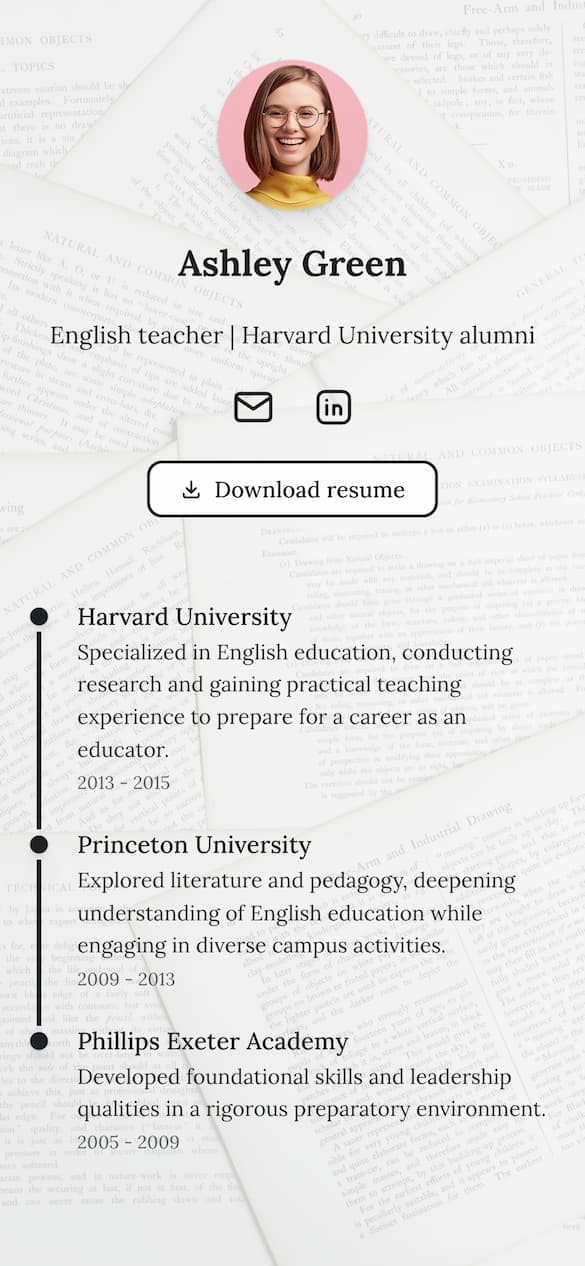
A single sentence: who you are, what you do, who you help. Pair it with a professional headshot, the same one that's on your LinkedIn profile so prospects recognize they're in the right place. Skip the long About paragraph.
Block 2: Book a Call
A calendar booking link as the primary CTA: Calendly, Cal.com, SavvyCal, or Chili Piper. Button copy should name a verb and a duration ("Book a 20-minute intro," "Reserve a discovery slot"). Generic "Contact me" loses bookings. For higher-volume founders, gate the calendar with a short qualification form that routes qualified prospects to a real slot.
Block 3: Newsletter or Publication
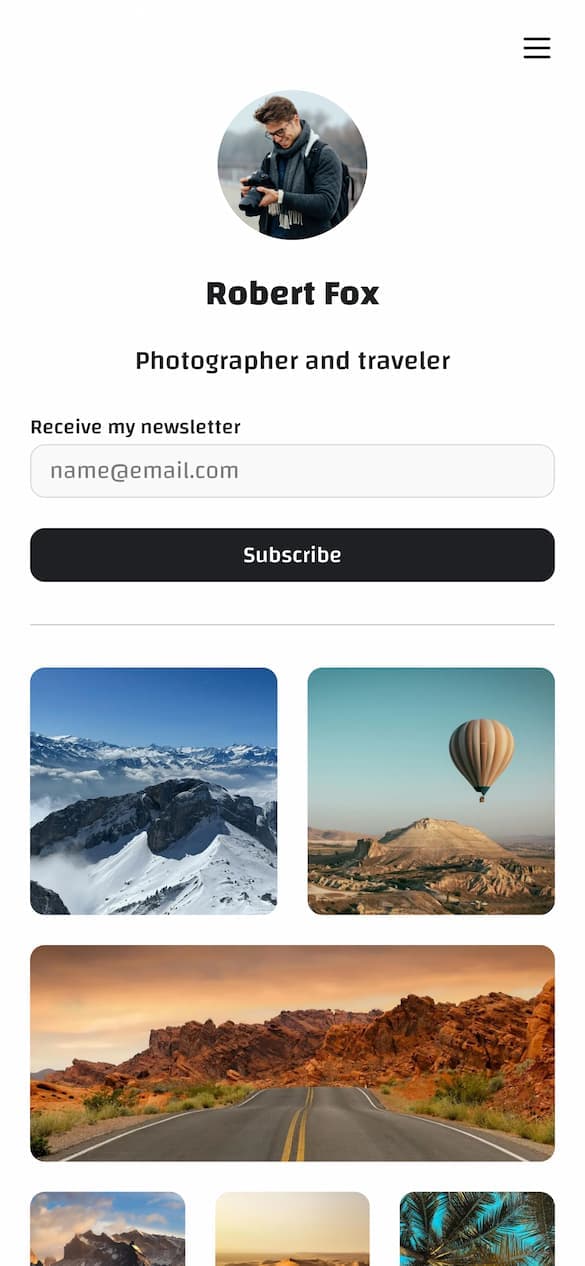
A Substack, Beehiiv, or ConvertKit signup form. The copy should be specific: "Join 5,000 RevOps leaders reading my weekly notes on pipeline math." A newsletter is the highest-leverage block for owned-audience growth, which matters when LinkedIn's algorithm shifts.
Block 4: Featured Case Studies or Content
Two or three case studies, picked for the ICP, with the actual outcome called out. Skip the "everything we've ever shipped" wall. If a prospect sells into manufacturing, the page should show manufacturing case studies, not retail.
Block 5: Press and Credibility
Company logos, press mentions (Forbes, TechCrunch, podcast appearances), or industry recognition. Use sparingly. Three high-trust logos beat ten mid-trust ones.
Block 6: Contact and Social
A direct email, your LinkedIn, and at most one or two other social links. Resist the urge to add Instagram, TikTok, and three other platforms. A B2B prospect is on LinkedIn for a reason.
Build Your Page in Minutes
Drag-and-drop editor with 18 content blocks, per-block styling, and custom themes.
Create your pageLead-Gen Funnels: LinkedIn to Bio Link to CRM
Three funnel patterns work for B2B bio link pages, and the right one depends on deal size and content volume.
The Discovery-Call Funnel
LinkedIn post or DM, bio link, discovery call calendar, CRM. The bio page exists primarily to route prospects into the booking flow. A pre-call form gates the calendar to qualify leads. This pattern is the default for consultants and high-ticket B2B sales.
The Newsletter-First Funnel
LinkedIn post, bio link, newsletter signup, email nurture sequence, discovery call. Better for high-volume, lower-ticket B2B where most prospects need several touches before they're ready to book. The newsletter has to deliver real value, not LinkedIn-style "engagement bait" reformatted as email.
The Case-Study Download Funnel
LinkedIn post about a case study, bio link to a gated PDF or video, CRM. Works well for enterprise sales where the case study itself drives the conversation. Requires real case-study content with named clients and named outcomes.
You can run two of these in parallel from one bio page. One primary CTA above the fold (usually the booking link), with the newsletter or case study as a secondary path below.
Tracking LinkedIn Referrer Traffic
Most bio link tools track referrer source so you can see what percentage of bio link traffic comes from LinkedIn versus other platforms. That alone is useful. The deeper play is differentiating between LinkedIn placements with UTM parameters.
Use:
?utm_source=linkedin_abouton the URL in the Website slot?utm_source=linkedin_nameon any URL appended to the name field?utm_source=linkedin_featuredon URLs pinned in the Featured section?utm_source=linkedin_poston URLs you drop directly into LinkedIn posts or comments
This tells you which LinkedIn placement actually drives conversions. Most pros never do this and run blind. The split is usually surprising: the Featured section can outperform the Website slot for pros who post frequently, because their pinned card is the highest-visibility surface on the profile.
Multi-Account Strategies for B2B Teams
Three patterns show up in the wild:
- Consultants with multiple offerings. A separate bio page per service area, so a consultant who does both fractional CFO work and FP&A advisory has a clean page for each. Both link from the LinkedIn Website slot via a small router page.
- Sales teams with individualized SDR pages. One template, customized middle, run from a single team plan. Each rep gets a personal page with their own photo, tagline, case studies, and booking link, but the brand layer stays consistent.
- Agencies running pages for client SDR teams. The agency builds and manages each page under the client's brand and custom domain from one dashboard. Useful for outsourced SDR shops or fractional revenue teams.
On Linkero, the Agency plan supports up to 25 client pages, a branded dashboard, folders, and team invites, which covers most multi-account setups. Plan limits and what's included live on the pricing page.
Comparing Tools for B2B LinkedIn Use
Tool fit matters more than features when the audience is B2B prospects evaluating you in 30 seconds.
| Capability | Linktree | Bio.Sites | Beacons | Linkero |
|---|---|---|---|---|
| Professional templates | Limited | Strong | Creator-focused | Strong |
| Custom domain | Paid tiers | Paid tiers | Paid tiers | Paid tiers |
| Remove tool branding | Paid tiers | Paid tiers | Paid tiers | All paid plans |
| Analytics by referrer | Basic | Basic | Basic | Yes |
| Team / multi-page | Limited | Limited | Limited | Agency plan |
A few notes on the comparison:
- Remove branding matters most for a solo B2B pro: it hides the tool's watermark so the page reads as yours. Agencies managing pages for client SDR teams should look at the team and multi-page row instead — that's the line that decides whether one dashboard can run every client page.
- Linktree works fine but is creator-coded by default. The visual customization is the constraint for a professional B2B page.
- Bio.Sites by Squarespace is the cleanest pure-templates option if you don't need the analytics or team layers.
- Beacons is creator-focused and adds friction for B2B audiences.
For founder personal branding, the adjacent guide is the SaaS founder bio link playbook. For team rollouts, the B2B sales team guide covers the per-rep version.
Custom Domain for Professional Credibility
A bio link on a custom domain reads as a real asset. linktr.ee/annarivera reads as a side project. annarivera.com or annarivera.link reads as part of a personal brand.
For founders, use a custom domain for professional credibility and put it in every email signature, LinkedIn Website slot, and Featured section card. The brand compounds when every channel routes to the same URL.
A few options:
- Use your own domain (
yourname.com) and point it at the bio link page. - Use a short branded URL like
yourname.link, which reads cleanly in LinkedIn DMs and on conference badges. - Avoid mixing personal and professional content on the same domain. A side-project blog and a B2B consulting bio page on the same URL dilutes both.
Common LinkedIn Bio Link Mistakes
Patterns that show up over and over on B2B profiles:
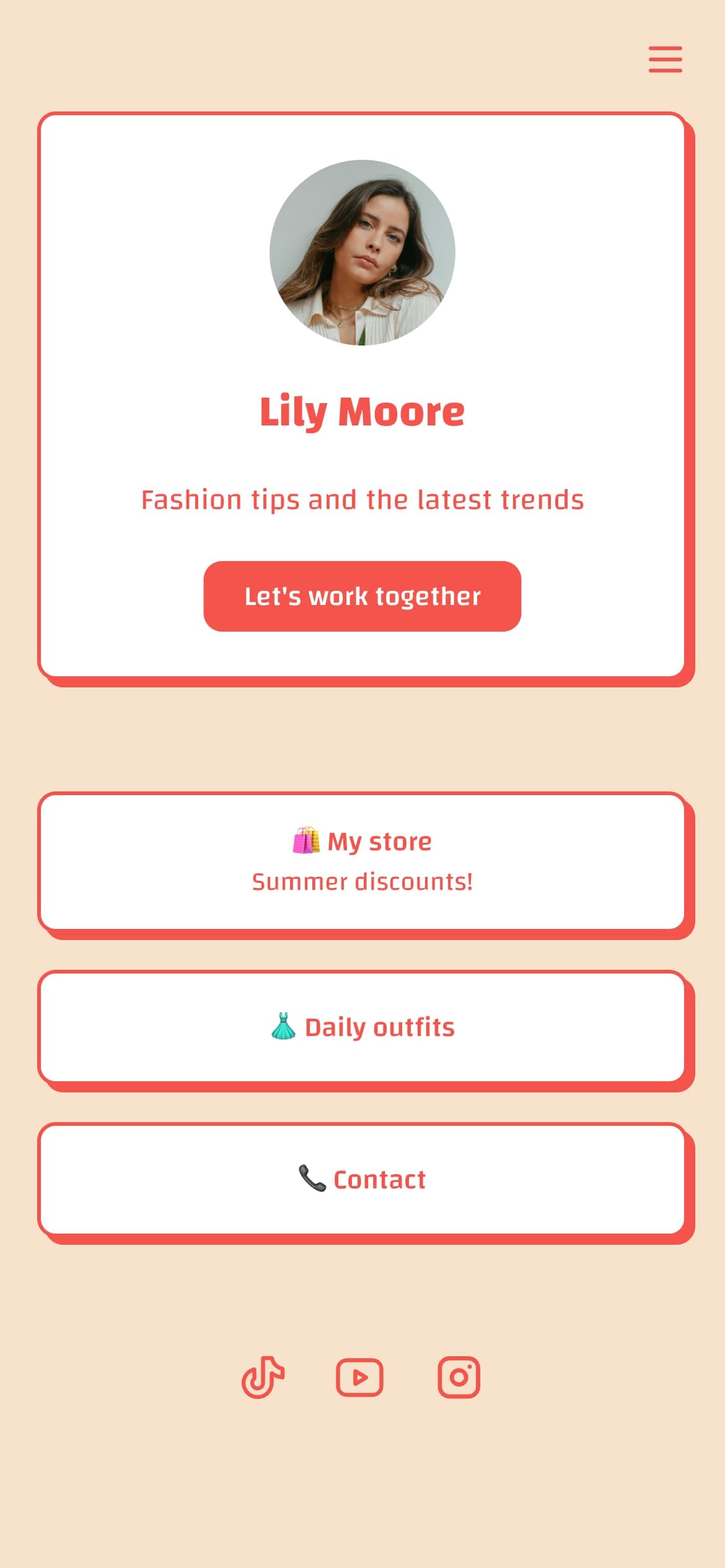
- Treating it like Instagram. Ten links, emojis, "latest content" headers. Off-brand for B2B prospects.
- Using a generic Linktree default URL. Reads as low-effort to a buyer evaluating credibility.
- No clear value prop above the fold. Prospects assume you don't know what you do.
- Burying the "book a call" CTA below five social media buttons. The hero action should be obvious in two seconds.
- Forgetting to update the Featured section. A pinned card promoting a six-month-old webinar makes the profile look stale.
- Mixing personal and professional content on one page. A B2B prospect doesn't want to see your travel photos under your fractional CFO offering.
- Pointing the Website slot at the company homepage. The homepage is calibrated for cold inbound traffic, not a warm LinkedIn prospect mid-evaluation. The conversion math is brutal.
The fix for each is the same shape: one branded URL, one clear value prop, one primary action, two or three credibility markers, a newsletter or content layer, and nothing else.
FAQ
Can you add a link in bio on LinkedIn?
Yes. LinkedIn allows one Website link on a personal profile, visible in the Contact Info panel. You can also use the Featured section to pin a link card with a custom thumbnail and title. The name field and headline can include URL fragments, but they're minor surfaces compared with the Website slot.
Is link in bio worth it for B2B?
Yes, for any B2B pro who runs outbound, posts on LinkedIn, or attends conferences. The bio page is the always-on conversion layer that turns LinkedIn DMs, conference touches, and email signatures into booked calls. Pointing the Website slot at a company homepage wastes the highest-leverage real estate on the profile.
How do I add a custom link to my LinkedIn profile?
Edit your profile, open Contact Info, and update the Website field. Use a short branded URL (yourname.com or yourname.link) rather than a tool subdomain. The same URL should go in your Featured section, your email signature, and your conference badge.
What should go on a B2B bio link page?
A one-sentence value prop with a professional photo, a primary CTA to book a call, a newsletter signup, two or three ICP-matched case studies, three credibility markers (logos, press, podcasts), and a direct email or contact form. Skip the wall of social links and the creator-coded aesthetic.
Best link in bio tool for LinkedIn?
Look for professional templates, custom domain support, analytics that track LinkedIn as a referrer, and team or multi-page features if you're running pages across a sales team. Linkero covers all of those. Bio.Sites by Squarespace works well if you only need templates. Linktree works but is creator-coded by default.
How do I track LinkedIn-specific traffic to my bio link?
Add UTM parameters to the URL in each LinkedIn placement: linkedin_about for the Website slot, linkedin_featured for pinned cards, linkedin_post for URLs dropped into posts. Most bio link analytics dashboards will then segment traffic and conversions by placement.
Should I use a Calendly link directly or route through a bio page?
Route through a bio page. Dropping a raw Calendly link skips the credibility step. A prospect who arrives on a bio page first sees the value prop, the case studies, and the press logos, then books. The conversion rate on the booking link is higher because the prospect is pre-qualified by the page before they ever see the calendar.
A LinkedIn Bio Link Is a Pipeline Surface
The Website slot on a LinkedIn profile is the highest-leverage real estate most B2B pros are still wasting. Point it at a single branded URL, build a page around one obvious action, and route every other LinkedIn placement (Featured, name field, posts) to the same destination. Add UTMs so you know which placement actually converts. Treat it like a pipeline surface, not a creator profile.
For the team version of this pattern, the B2B sales team bio link guide covers per-rep rollouts under a single template. For founder personal branding, the SaaS founder playbook and the founder bio page guide cover the single-person version. For agencies running pages on behalf of client SDR teams, the agency bio link guide covers multi-client setups, and managing multiple SDR accounts covers the operational pattern.
Create Your Link-in-Bio Page
All your content in one customizable page. 18 content blocks, custom domains, and built-in analytics.
Create your page