Link in Bio for B2B Sales Teams: Why Every Rep Needs One
 Marcel Cruz
Yes, B2B sales reps need a personal bio link. A LinkedIn profile has exactly one Website slot, and the Featured section is image-only with no place for a booking link, a case study library, and a pricing page at the same time. A sales rep's bio link is the always-on prospecting page that turns every cold DM, every conference badge, and every email signature into a one-tap path to book a meeting. This guide walks through what to put on a sales rep's bio page, how to structure it for booking conversion, and how to roll it out across an AE or SDR team without IT involvement.
Why LinkedIn Alone Isn't Enough for Modern Sales Reps
LinkedIn allows one Website link on a personal profile. That's it. The Featured section can hold posts, articles, images, and links, but it's a top-of-funnel showcase, not an action layer. Prospects scroll Featured looking at recent posts. They do not pause there to book a meeting, download a case study, or check pricing.
The math on rep activity makes this expensive:
- A typical SDR runs 30 to 50 LinkedIn touches per week per rep
- A typical AE works 15 to 30 active prospects at any given time with multi-thread outreach
- Most of those touches end with "happy to share more, what's the best email?" or with a link to the company homepage
A company homepage is calibrated for inbound marketing traffic, not for a warm prospect who already had a conversation with one of your reps. The drop-off rate from "rep DM" to "company homepage" to "booked meeting" is brutal. The rep created the trust. The homepage doesn't know that.
A personal bio link is the missing layer. It picks up the prospect at peak intent, references the conversation they just had, and gives them exactly one obvious next step.
What Goes on a Sales Rep's Bio Link
The structure is different from a creator page. A creator fans traffic outward across many links. A sales rep funnels traffic toward one action: book a meeting.
Build the page around that hierarchy:
- Calendar booking link, front and center. Calendly, Cal.com, Chili Piper, HubSpot Meetings, whichever your team uses. This is the single most important block on the page.
- One to three case studies. Picked for the rep's ICP, not the company's full library. If a rep sells into manufacturing, the page shows manufacturing case studies, not retail.
- One free resource. A gated PDF, a demo recording, a benchmark report, or an ROI calculator. Gives prospects who aren't booking-ready something to do.
- Link to pricing. For self-qualified prospects who want to check whether you're in their budget range before talking.
- Credibility links. Public LinkedIn profile, company About page, maybe a podcast appearance or webinar recording.
- Direct email. For prospects who genuinely prefer async over a call.
Anti-pattern: a wall of equal-weighted links with no hero CTA. If everything is equal, nothing converts. The booking link gets the largest button and the top position. Everything else is supporting.
The Always-On Prospecting Page Structure
A working sales-rep bio page reads top to bottom like this:
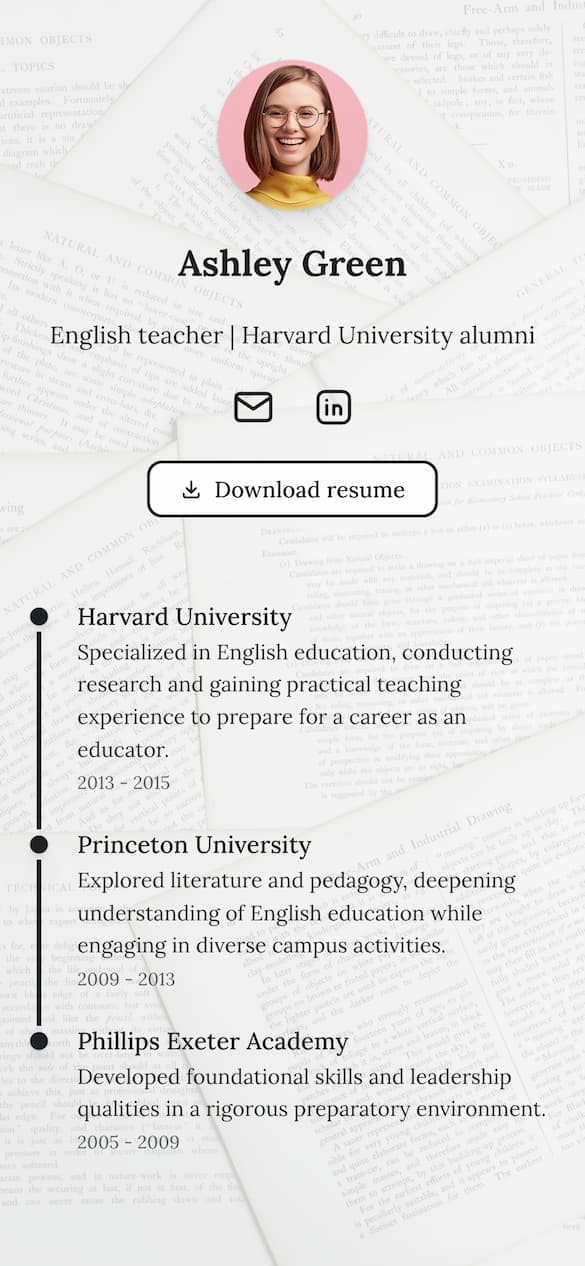
- Header. Photo (the same one as the LinkedIn headshot, so prospects know they're in the right place), name, title, ICP-specific tagline.
- Primary CTA. "Book a 15-minute intro call" with a calendar booking link.
- Two or three case studies. Short, ICP-matched, with the actual outcome called out.
- Resource block. One downloadable asset.
- Social proof. Logos, a short testimonial, or a number that matters in your category.
- Secondary contacts. LinkedIn, email, optional company page.
Keep the page tight. The temptation is to load it up with everything the company has ever shipped. Resist that. The page exists to convert a single moment of intent into a booked meeting.
Build Your Page in Minutes
Drag-and-drop editor with 18 content blocks, per-block styling, and custom themes.
Create your pageTeam Deployment — How to Roll This Out Without IT
A rep can build their own bio page in an afternoon. A 25-person sales team building 25 disconnected pages is a brand control problem. The fix is a template-plus-customize model run from a single team plan.
The pattern that works:
- One parent account owns every rep's page. No personal-email signups, no "what happens when the rep leaves" data ownership issues.
- A page template defines the brand layer. Header style, colors, footer block, fonts, the case study card layout.
- Each rep customizes the middle. Their photo, their headline, their case studies, their booking link, their tagline.
- Custom domain on the company brand.
sales.yourcompany.com/firstnamereads as legitimate. A random tool subdomain reads as a side project. - Per-page analytics are the rep dashboard. Page views, click-through rate on the booking link, top-clicked case study.
On Linkero, the Agency plan supports up to 25 pages with team invites, a branded dashboard, and folders to keep each rep's page organized — enough for a typical AE bench plus the SDR team. The Pro plan covers a single rep or a two- to three-person founding sales motion. Plan limits and what's included live on the pricing page.
For the rollout itself, the SOP that gets adoption looks like:
- Sales ops or RevOps builds the template once.
- Each rep gets a 30-minute slot to customize their page (photo, tagline, case study picks, calendar link).
- The page URL goes into the rep's email signature, LinkedIn Website slot, conference badge QR codes, and Loom video descriptions on the same day it launches.
- Sales managers review the analytics dashboard once a week to spot top-performing taglines and case study orders.
No IT ticket required. No engineering time. The whole rollout fits inside a week if sales ops owns it.
LinkedIn Featured Section vs Bio Link
These are not the same thing and they shouldn't replace each other.
The Featured section is top-of-funnel social proof. It shows prospects what you've been thinking about lately: recent posts, demos you've recorded, articles you've written, panels you've spoken on. It's content that confirms credibility while the prospect is scrolling.
The bio link is the action layer. It's where prospects go when they've decided to take a next step but the LinkedIn DM thread feels too informal for a meeting request. The Website slot at the top of the profile is the door from one to the other.
The split: Featured for credibility content, bio link for booking and conversion. Use both, not one or the other. The Website slot pointing at a personal bio page is the highest-leverage real estate on a sales rep's LinkedIn profile, and most reps still leave it pointing at the company homepage.
Email Signature, QR Codes, and Loom Integration
Once the page is live, the rep's job is to put the URL everywhere a prospect might see it:
- Email signature.
sales.yourcompany.com/firstnameunder the name and title. - LinkedIn Website slot. Same URL.
- Conference badge. One QR code linking to the page so booth visitors can book without typing.
- Loom and Vidyard video descriptions. Every async video the rep records ends with "book time here" pointing at the same page.
- Webinar follow-up emails. A single link in the follow-up sequence instead of three separate buttons.
- Cold-outreach call-to-action. "When you're ready to talk, my booking link is in my bio at firstname.sales.yourcompany.com."
The whole point is that the rep has one URL to remember, and every channel funnels prospects to the same destination. Tracking gets clean because every booking eventually credits the same page.
Calendar Booking Best Practices
Most B2B sales teams use one of four tools:
- Calendly. Default for solo reps and small teams. Free tier covers basic 1:1 booking.
- Cal.com. Open source, EU-friendly, self-hostable if data residency matters.
- Chili Piper. Round-robin routing across an AE team plus instant qualification routing from form fills.
- HubSpot Meetings or Salesforce Inbox calendars. Built into the CRM, useful if all activity needs to log against records automatically.
On a bio page, the booking flow is usually a clearly labeled button that opens the calendar tool. Calendly's popup widget script also exists, but most teams find that a clean button link reads more professionally on a personal page. Whichever tool, the button copy should be a verb plus a duration: "Book a 15-minute intro," "Schedule a 30-minute demo," "Grab time this week." Generic "Contact me" loses bookings.
If your team uses Chili Piper for round-robin, the bio page button should link to the rep's personal routing URL, not the team router. The point of a personal bio page is that the prospect already chose this rep.
What About Sales Managers — The Rollup View
Sales managers don't need a bio page of their own as much as they need visibility into the team's pages. The aggregate picture answers three questions:
- Which reps' pages convert the best? Highest booking-link clicks per page view.
- Which taglines and case-study orders correlate with bookings? Top reps' page structure becomes the template for everyone else.
- Which pages are stale? A rep changing accounts and forgetting to update their tagline shows up as a slow drift in page-level CTR.
On a team plan with per-page analytics, this rollup is straightforward to pull. Look at booking-link click-through rate weekly. Promote the structures that work. Re-template the ones that don't.
For deeper attribution all the way through to closed-won revenue, the bio page CTR is the leading indicator and the CRM holds the outcome. Connecting them is usually a UTM convention on the booking link itself.
Common Mistakes Sales Reps Make on Bio Pages
Five patterns that show up over and over:
- Generic tagline. "I help companies grow" tells the prospect nothing about fit. ICP-specific taglines convert: "I help mid-market manufacturers cut warehouse downtime."
- No booking link. "Email me at..." is friction. A calendar booking link converts at multiples of an email address.
- Off-ICP case studies. A rep selling into healthcare showcasing retail wins makes prospects assume the rep doesn't really know the vertical.
- Forgetting to update after a promotion or territory change. A page that still references the old role makes the rep look distracted at the worst possible moment.
- Sending the company homepage instead. The homepage is for cold inbound traffic. A prospect who DM'd a rep on LinkedIn deserves a page that acknowledges the conversation already happened.
For the deeper conversion playbook on bio pages, our link-in-bio design and conversion guide and the CTA writing guide cover the structural and copy decisions in detail.
FAQ
Should B2B sales reps have a link-in-bio? Yes. LinkedIn allows one Website link on a personal profile, and the Featured section can't host a booking link. A personal bio page is where the rep funnels every cold DM, conference touch, and Loom video viewer toward the one action that matters: booking a meeting.
What's the difference between a LinkedIn Featured section and a bio link? Featured is top-of-funnel social proof: recent posts, demos, articles. The bio link is the action layer where prospects book a meeting or download a resource. Use both, not one or the other.
How do account executives use bio links? AEs use them as the destination behind their LinkedIn Website slot and email signature. The page hosts the booking calendar, two or three ICP-matched case studies, a free resource, and a pricing link. The goal is a one-tap path from any cold touch to a booked meeting.
What's the best link-in-bio tool for sales teams? Pick one with team plans (invite members, multiple pages under one account), per-page analytics for manager visibility, a branded dashboard for consistency, and custom domain support so the URL reads as a company asset rather than a side project. Linkero covers all four on the Agency plan.
Can I add a calendar to my bio link? Yes. The standard pattern is a primary button that links to the rep's Calendly, Cal.com, Chili Piper, or HubSpot Meetings page. Button copy should name a verb and a duration ("Book a 15-minute intro") so prospects know exactly what they're committing to.
Should sales reps have a personal landing page? A bio page is the simpler, lower-maintenance version of a personal landing page. It captures most of the booking conversion without the build and maintenance cost. Reps who need long-form content can add a personal landing page later, but a bio page covers the prospecting use case on day one.
A Sales Rep's Bio Link Is Leverage
Every cold DM, every conference badge, every email signature, every Loom video description points at the same URL. The page sits there 24/7, ready to convert the next prospect who's curious enough to click. Thirty minutes to set up, lifetime of meetings booked.
For SDR and AE teams, the leverage compounds: 25 reps with personal bio pages mean 25 always-on prospecting surfaces, all reporting back to one analytics dashboard. The team plan is the difference between a brand-consistent rollout and 25 different-looking pages.
If you're a freelance sales consultant or solo founder running your own outbound, the founder bio page guide and the freelancer playbook cover the single-rep version. For technical founders selling B2B SaaS, the SaaS founder bio page guide is the adjacent playbook. For the LinkedIn-specific placement strategy (Website slot, Featured section, UTMs by placement), see link in bio for LinkedIn.
Build Your Page in Minutes
Drag-and-drop editor with 18 content blocks, per-block styling, and custom themes.
Create your page